هاب ژانر سینمایی / Film Genre Hub

منظومه ژانر سینمایی / Film Genre Hub

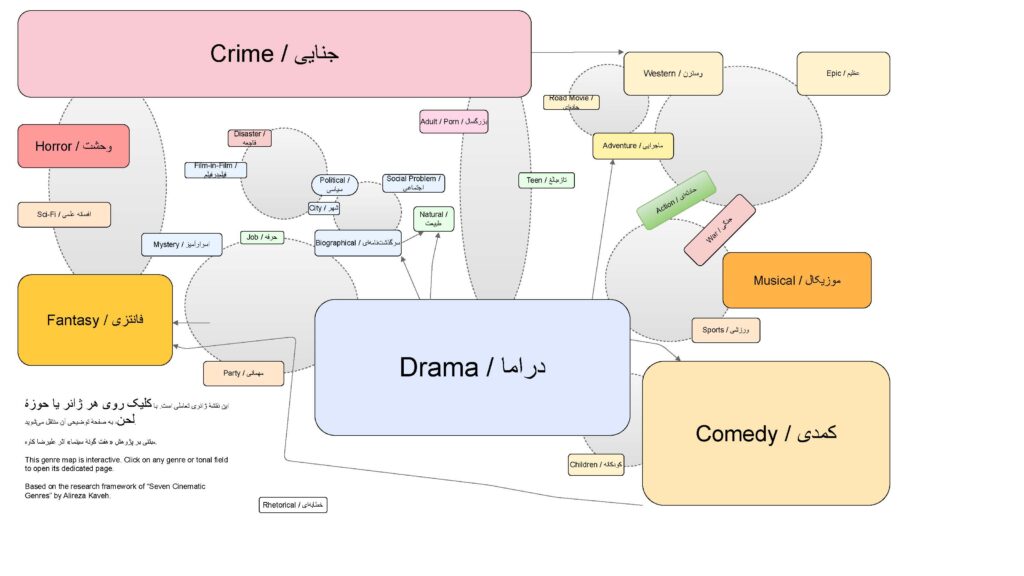
این صفحه مرکز معرفی و پیونددهی تمام محتوای مرتبط با «ژانر» در درگاه علیرضا کاوه است: نظریه‌ها، کتاب‌ها، مقالات، نقشهٔ ۲۸ ژانر .

This hub is the central gateway to all genre-related work by Alireza Kaveh: theories, books, articles, the 28-genre rainbow map, and AI tools.

ستون فارسی

نظریه‌های ژانر و بینندگی

در این درگاه، «ژانر» فقط فهرست موضوعی فیلم‌ها نیست، بلکه بر پایهٔ لحن، دریافت و جایگاه بیننده در تجربهٔ سینمایی تعریف می‌شود.

کتاب‌ها

نقشهٔ ۲۸ ژانر (ستون فارسی)

هفت ژانر اصلی:

  1. جنایی
  2. کمدی
  3. درام
  4. وسترن
  5. وحشت
  6. فانتزی
  7. موزیکال

ژانرهای تکمیلی:

  1. عظیم (اپیک)
  2. افسانه/اسطوره‌ای
  3. علمی‌تخیلی
  4. ماجرایی
  5. اسرارآمیز
  6. کودکانه
  7. سرگذشت‌نامه‌ای
  8. ورزشی
  9. جنگی
  10. فیلم در فیلم
  11. اجتماعی
  12. فاجعه
  13. نوجوان (تین‌پیک)
  14. شغلی/پیشه
  15. مهمانی/پارتی
  16. ژانر ۲۳ (به‌زودی)
  17. ژانر ۲۴ (به‌زودی)
  18. ژانر ۲۵ (به‌زودی)
  19. ژانر ۲۶ (به‌زودی)
  20. ژانر ۲۷ (به‌زودی)
  21. ژانر ۲۸ (به‌زودی)

مقالات ژانری

ابزارهای هوش مصنوعی مرتبط با ژانر

دانلود فایل‌ها

English Column

Genre & Viewership Theories

In this portal, genre is not just a list of story types; it is defined through tone, value systems, and the position of the viewer within the cinematic experience.

  • Tone-based Theory of Film Genre – derived from the book Film Genre: Tone and Ideology (Theory overview)
  • Cinematic Taxonomy – a five-part model: medium, style, genre, format, tradition (Taxonomy overview)
  • Viewership Theory – fire, light, shadow and the phenomenology of spectatorship (Viewership overview)
  • Rainbow Genre Model – a 28-genre map combining 7 core and 21 complementary genres (Rainbow map)

Books

28-Genre Rainbow (English)

Seven primary genres:

  1. Crime
  2. Comedy
  3. Drama
  4. Western
  5. Horror
  6. Fantasy
  7. Musical

Complementary genres:

  1. Epic
  2. Mythic / Legendary
  3. Science Fiction
  4. Adventure
  5. Mystery
  6. Children’s
  7. Biographical
  8. Sports
  9. War
  10. Film-within-Film
  11. Social
  12. Disaster
  13. Teen / Youth
  14. Job / Profession
  15. Party / Gathering
  16. Genre 23 (to be added)
  17. Genre 24 (to be added)
  18. Genre 25 (to be added)
  19. Genre 26 (to be added)
  20. Genre 27 (to be added)
  21. Genre 28 (to be added)

Articles

AI Tools

  • Alireza Kaveh – Film & Iranian Cinema Advisor (GPT)Portal page
  • Seven Genres of Cinema – Public GPTHow to use

Downloads

۱. تعریف ژانر و مدخل‌های کلان (Core Genre Definitions)

۲. کتاب‌ها و متون پایهٔ نظری (Core Books & Essays)

۳. لحن، رنگین‌کمان ژانری و هم‌پیوندی (Tone, Rainbow Genre & Connectivity)

۳.۱. میدان‌های لحن و تون‌فیلدها (Tone Fields & Microfields)

۴. ژانرهای اصلی و تکمیلی (Seven & Twenty-One Genres)

۴.۱. ژانرهای اصلی (Main Seven Genres)

۴.۲. ژانرهای گروه «ب» (Group B Genres)

۴.۳. ژانرهای گروه «پ» (Group P Genres)

۴.۴. ژانرهای گروه «ت» (Group T Genres)

۵. هوش مصنوعی، ژانر و پروژه‌های پیوسته (AI, Genre & Connected Projects)

۶. منابع آموزشی و ویکی‌پدیا (Educational Resources & Wikipedia)

ویدیوهای آموزشی ژانر / Film Genre Video Resources

ویدیوهای آموزشی ژانر در اینترنت

Film Genre Educational Video Resources

در این صفحه، مجموعه‌ای از ویدیوهای آموزشی ژانر در فضای مجازی گردآوری شده است؛ ویدیوهایی که برای درک بهتر مفهوم ژانر، ساختار روایت، لحن و شیوه‌های بصری در سینما مفید هستند. این فهرست پخش به‌صورت گزینشی (Curated) توسط علیرضا کاوه تنظیم شده و در طول زمان به‌روزرسانی خواهد شد.

About this playlist: This page gathers a curated selection of online video resources on film genre, narrative structure, tone, and visual style. All videos are collected and organized by Alireza Kaveh as part of his ongoing research on film genre and cinematic taxonomy. The playlist will be updated over time as new relevant materials appear.

یادداشت دربارهٔ گزینش ویدیوها

در این فهرست پخش، تنها ویدیوهایی قرار گرفته‌اند که به شکل مستقیم به مفهوم ژانر، ساختار ژانری، لحن و شیوه‌های روایت در سینما مربوط هستند. ویدیوهای عمومی‌تر یا آموزش‌های پراکنده در این مرحله کنار گذاشته شده‌اند تا تمرکز صفحه حفظ شود.

در آینده، منابع دیگری از مؤسسات و کانال‌های معتبر نیز به این صفحه اضافه خواهد شد تا دانشجویان، پژوهشگران و علاقه‌مندان بتوانند یک نقطهٔ ورود متمرکز برای یادگیری سینمای ژانر در فضای مجازی داشته باشند.

برای دنبال‌کردن فهرست‌های تازه و ویدیوهای مرتبط با پژوهش‌های ژانر، کانال یوتیوب علیرضا کاوه را دنبال کنید:

Visit Alireza Kaveh on YouTube

ژانر موزیکال

فیلم ژانر

ژانر سینمایی چیست؟

ژانر فیلم چیست؟ | تعریف، تاریخچه و نظریه‌های ژانر در سینما

بازاندیشی ژانر/ Rethinking Genre

گونه چیست

ژانر چیست؟ (What Is Genre?)

ویدیوها

ژانر چیست؟ (What Is Genre?)

ژانر چیست؟ (What Is Genre?)

زیرعنوان: تعریف، تاریخچه و بازاندیشی مفهوم ژانر در ادبیات، موسیقی، نقاشی و سینما

ژانر یا گونه (Genre) در ساده‌ترین تعریف، دسته‌بندی آثار هنری با ویژگی‌های مشترک است. اما آنچه آن را ماندگار می‌کند، قرارداد احساسی/زبانی میان خالق و مخاطب است: انتظارات، لحن و تجربهٔ مشترک. این قرارداد در ادبیات (حماسی/غنایی/نمایشی)، موسیقی (کلاسیک/جاز/پاپ)، نقاشی (پرتره/منظره/طبیعت بی‌جان) و سینما (کمدی/ملودرام/وحشت/موزیکال) با نشانه‌های خاص هر هنر آشکار می‌شود.

«ژانر نه برچسب، که لحنِ مواجههٔ انسان با جهان است.»

علیرضا کاوه

ریشه و تحول تاریخی ژانر

واژهٔ Genre از فرانسه می‌آید و به معنای «نوع/جنس» است. نخست در نقد ادبی برای تمایز شکل‌ها به‌کار رفت؛ با ظهور سینما، از متن به تجربهٔ دیداری-شنیداری منتقل شد و نشانه‌هایی مانند لحن، رنگ، ریتم، صدا به شاخص‌های ژانری بدل شدند.

کولاژی از کتاب قدیمی و دوربین فیلمبرداری اولیه برای نشان دادن گذار از متن به تصویر
از متن به تصویر: دگردیسی تاریخی مفهوم ژانر

در خوانش‌های پژوهشی، ریک آلتمن ژانر را سامانه‌ای از «قراردادهای ارتباطی»، تزوتان تودوروف آن را دستورِ نحوی روایت‌ها، و دیوید بوردول ابزاری برای سامان‌دهی به انتظارات مخاطب دانسته‌اند. پرسش کلیدی همچنان پابرجاست: ژانر خاصیت اثر است یا زبانِ ادراک ما؟

ژانر در هنرهای مختلف

ادبیات

در ادبیات، تقسیم‌بندی‌ها از شکل (نثر/شعر/نمایش‌نامه) تا کارکرد و لحن (حماسی/تراژیک/کمدی/غنایی) امتداد پیدا می‌کند. ژانر اینجا به «شیوهٔ خطاب» و «انتظار خواننده» گره می‌خورد.

موسیقی

در موسیقی، ژانر فراتر از سبک است؛ سبک به تکنیک اجرا اشاره دارد، اما ژانر به چگونگی شنیدن و احساس. «کلاسیک»، «جاز» یا «راک» فقط توالی نت‌ها نیستند؛ هالهٔ احساسی و ارزش‌های شنیداری هم هستند.

نقاشی

در نقاشی، ژانرها تاریخی و موضوع‌محورند (پرتره/منظره/طبیعت بی‌جان/تاریخی)، اما تمایز واقعی اغلب در زاویهٔ دید و لحن نگاه رخ می‌دهد؛ یعنی در نحوهٔ مواجههٔ نقاش با جهان.

سه‌نما: قلم و کاغذ برای ادبیات، ساز موسیقی برای موسیقی، بوم و قلم‌مو برای نقاشی
ژانر در ادبیات، موسیقی و نقاشی: زبان‌های متفاوت، قرارداد مشترک

سینما

در سینما، ژانر زبان مشترک صنعت و تماشاگر است. هر فیلم با بهره‌گیری از قراردادها اعتماد می‌گیرد و با شکستن هوشمندانهٔ همان قراردادها نو می‌شود. به‌همین دلیل، ژانر در سینما زنده است: با هر فیلم، دوباره نوشته می‌شود.

برای روایت عمیق‌تر در حوزهٔ سینما ببینید: ژانر سینمایی، ژانر فیلم، و بازاندیشی ژانر.

سالن تاریک سینما با پرده روشن و مخاطبانی که در حال تماشا هستند
ژانر در سینما: قراردادِ زندهٔ میان فیلمساز و تماشاگر

نقد نگاه سنتی: ژانر فراتر از «موضوع»

تعاریف رایج، ژانر را به مضمون یا بازار تقلیل می‌دهند؛ اما تجربهٔ تماشاگر نشان می‌دهد ژانر در لحن تحقق می‌یابد. «کازابلانکا» عاشقانه است اما قهرمانانه؛ «جوکر» جنایی است اما تراژیک-اجتماعی. بنابراین ژانر نه صرفاً در «چه می‌گوید»، بلکه در «چگونه می‌گوید» شکل می‌گیرد.

Genre is not a label but a worldview — a grammar of feeling.

Alireza Kaveh

ژانر به‌مثابه لحن و نظام ارزشی

در چارچوب «نظریهٔ لحن و ایدئولوژی»، ژانر با نحوهٔ مواجههٔ انسان با موقعیت احساسی/اخلاقی تعریف می‌شود. نمونه‌ها: وحشت = مواجهه با ترس؛ کمدی = بازی با تناقض و گریز؛ موزیکال = پیوند بدن و موسیقی. ژانر در این معنا یک جهان‌بینی هنری است، نه فقط طبقه‌بندی صنعتی.

چند چهره در نورهای متفاوت برای نمایش طیف لحن‌ها
طیف لحن‌ها: جایی که ژانر به تجربهٔ انسانی گره می‌خورد

بازاندیشی امروز: ژانر به‌عنوان ساختار زندهٔ معنا

در عصر هم‌نشینی رسانه‌ها، ژانر بیش از پیش نیازمند بازتعریف است. فیلم‌ها مرز مستند/موزیکال را می‌شکنند؛ شعر تصویری می‌شود؛ نقاشی روایت‌گر. ژانر چارچوبی سیال برای تداوم معناست. برای بحث نظری مفصل‌تر: بازاندیشی ژانر.

جمع‌بندی

ژانر دیگر فقط یک قفسهٔ بایگانی نیست؛ معماری بیان است. هر هنرمند ژانرِ خود را می‌نویسد—در دل شبکه‌ای از قراردادهای جمعی. برای مطالعهٔ بیشتر: ژانر فیلم، ژانر سینمایی، بازاندیشی ژانر.


What Is Genre? (English)

Short English version for international readers. Full Persian text above.

Definition: Genre is not merely classification; it is a shared contract of tone and expectation between creator and audience across literature, music, painting, and cinema. Historically rooted in French criticism, genre migrated from textual form to audiovisual experience, where tone, color, rhythm, and sound became its markers.

Across the arts: In literature (epic/lyric/dramatic), music (classical/jazz/pop), painting (portrait/landscape/still-life), and cinema (comedy/melodrama/horror/musical), genre organizes how we feel and interpret works. See also: Cinematic Genre, Rethinking Genre.

Beyond theme: Genre resides in tone. “Casablanca” is romantic yet heroic; “Joker” is criminal yet tragic. In the tone-centered theory, each genre encodes a human attitude (horror: confronting fear; comedy: playing with contradiction; musical: fusing body and music). Genre becomes a worldview—a grammar of feeling.

Conclusion: Genre is the living architecture of meaning. Each artist rewrites it within the culture’s shared horizon. Further reading: Film GenreCinematic GenreRethinking Genre.


پرسش‌های متداول (FAQ)

  • تفاوت ژانر و سبک چیست؟ سبک به تکنیک و شیوهٔ اجرا اشاره دارد؛ ژانر به لحن و انتظار مخاطب.
  • آیا ژانر فقط موضوع است؟ خیر، در تجربهٔ مخاطب ژانر در چگونگی گفتن (لحن) متجلی می‌شود نه صرفاً در چه گفتن (موضوع).
  • چرا ژانر در سینما زنده‌تر است؟ چون هر فیلم قراردادها را دوباره می‌نویسد و با شکستن آن‌ها نو می‌شود.
  • نظریهٔ «لحن و ایدئولوژی» چیست؟ نگاهی که ژانر را به‌عنوان نظامی از ارزش‌ها/لحن‌ها در مواجههٔ انسانی تبیین می‌کند.

نویسنده و پژوهش: علیرضا کاوهIMDb | Google Scholar | ORCID

Download the 28-Genre Cinematic Map (PDF)

ژانر

ژانر موزیکال

ژانر سینمایی چیست؟

بازاندیشی ژانر/ Rethinking Genre

فیلم ژانر

نظریه‌ی رنگین کمان ژانری

🎞 نظریه ژانر / Film Genre Theory

رونمایی از صفحهٔ رسمی علیرضا کاوه در ResearchGate

رونمایی از صفحهٔ رسمی علیرضا کاوه در ResearchGate
امروز صفحهٔ رسمی علیرضا کاوه، نویسنده، پژوهشگر و فیلم‌ساز، در پلتفرم علمی ResearchGate تکمیل و منتشر شد. در این صفحه، سه کتاب اصلی نویسنده—
«Film Genre: Tone and Ideology»،
مجموعه‌ سه‌جلدی «هفت گونهٔ سینما»،
و «Such a Dark Mirror»—
به‌همراه دو مقالهٔ دارای DOI در دسترس قرار گرفته‌اند.

این دو مقاله که در مخزن بین‌المللی Zenodo منتشر شده‌اند شامل:

Cinematic Taxonomy: Summary Edition

Aesthetic Tone and Value System in Film Genre

هستند و اکنون از طریق ResearchGate نیز قابل مشاهده‌اند.

صفحهٔ ResearchGate بخشی از شبکهٔ هویت علمی علیرضا کاوه است که با پیوند به ORCID، Google Scholar، Internet Archive، Academia.edu، و Goodreads تکمیل می‌شود. انتشار این صفحه گامی مهم در ارائهٔ جهانی نظریات «لحن‌محور»، «تقسیم‌بندی پنج‌گانهٔ سینمایی» و پروژهٔ Notahistory of Cinema محسوب می‌شود.

نشانی صفحه:
https://www.researchgate.net/profile/Alireza-Kaveh-2

🔵 English Version (for bilingual SEO + international readers)
Official ResearchGate Profile of Alireza Kaveh Launched
The official ResearchGate profile of Alireza Kaveh—Iranian author, film theorist, and filmmaker—has been completed and published today.
The profile now includes the author’s major books:
Film Genre: Tone and Ideology,
the three-volume series Seven Kinds of Cinema,
and Such a Dark Mirror,
alongside two DOI-indexed publications available through Zenodo:

Cinematic Taxonomy: Summary Edition

Aesthetic Tone and Value System in Film Genre

The ResearchGate page forms an essential part of Alireza Kaveh’s international academic presence, connected to ORCID, Google Scholar, Internet Archive, Academia.edu, and Goodreads.
This development strengthens the global visibility of his theoretical works, including the Tone-Based Genre Theory, the Five-Part Cinematic Taxonomy, and the research project Notahistory of Cinema.

Profile link:
https://www.researchgate.net/profile/Alireza-Kaveh-2

Newsroom | اتاق خبر

/Links

رونمایی از صفحات علمی علیرضا کاوه

Expansion of Alireza Kaveh’s Scientific Footprint Across International Research Platforms

In a significant step toward strengthening the accessibility and global visibility of his academic work, filmmaker and theorist Alireza Kaveh has expanded his presence across several major international scientific and discovery platforms. These newly integrated profiles help consolidate his research output—from cinema studies and genre theory to interdisciplinary work on artificial intelligence and media—under a unified and traceable scholarly identity.

A number of reputable global databases, including Europe PMC, OpenAIRE, OpenAlex, DataCite Commons, and Virgool Scholar, now index Kaveh’s research contributions, works, and citations. This development ensures that his books, articles, and theoretical projects—such as Film Genre: Tone and Ideology, Cinematic Taxonomy, and AI and Cinema—can be followed and discovered more easily by researchers worldwide.

These platforms complement the core academic profiles already established on Google Scholar and ORCID, expanding the ecosystem through which his works are archived and disseminated. The integration of these new channels marks an important step in creating a comprehensive scholarly network around Kaveh’s research activity.

New Scientific Profiles

As these platforms continue to update and ingest new data, Kaveh’s upcoming research, cinematic analyses, and theoretical publications will also be reflected across them. The personal portal AlirezaKaveh.com remains the central hub for all announcements, updates, and official releases.

Newsroom | اتاق خبر

/Links

Alireza Kaveh Begins Publishing on IMDb

Published on: November 26, 2025

Alireza Kaveh Begins Publishing on IMDb

Alireza Kaveh Begins Publishing His Research and Critical Writings on IMDb
TEHRAN — Iranian author and film theorist Alireza Kaveh has begun publishing selected research notes and critical writings on IMDb, extending his ongoing efforts to document overlooked aspects of Iranian cinema within a globally accessible reference platform.

Kaveh’s decision to use IMDb as one of his publication channels follows years of archival and analytical work across multiple fields, including genre theory, cinematic taxonomy, and viewership studies. His contributions now appear within IMDb’s internal contributor workflow, where his submitted research materials are reviewed and integrated into the platform’s public database.

His recent descriptive entry on Parastuha Be Laneh Barmigardand (1964) marks the first step toward presenting underrepresented Iranian films and filmmakers to a wider international audience. The bilingual note (Persian and English) offers contextual insights into the film’s position within Iran’s early social melodrama tradition.
Readers can access Kaveh’s current contributions through his IMDb review section, available here:


https://www.imdb.com/user/ur201460854/reviews/

“My aim is to make historically neglected dimensions of Iranian cinema visible to a broader public,” Kaveh said. “IMDb is simply one of the platforms where this work can live—an accessible global database for researchers, viewers, and anyone tracing the cultural memory of cinema.”

Alongside his recent work on Film Genre: Tone and Ideology, Cinematic Taxonomy, and Viewership Theory, Kaveh’s contributions to IMDb form part of a larger initiative to connect Iranian film scholarship with international archival networks, ensuring that overlooked cinematic histories can be discovered and studied by new global audiences.

🔗 https://www.linkedin.com/newsletters/cinema-notes-by-alireza-kaveh-7399337902171840513

/Links

Newsroom | اتاق خبر

IMDB Reviews

https://medium.com/@kave.alireza/publishing-research-notes-on-imdb-a-new-step-in-documenting-iranian-cinema-f60fb6fb4fd4

IMDB Reviews

مرورهای علیرضا کاوه در IMDB آی ام دی بی

https://www.imdb.com/user/ur201460854/?ref_=tturv_t_usr_1

مرورهای علیرضا کاوه در IMDb

Alireza Kaveh – IMDb Reviews & Film Analysis

در این صفحه مرورهایی را که علیرضا کاوه IMDb منتشر می‌کند، گردآوری می‌شود؛ مروری تحلیلی بر فیلم‌های مهم سینمای ایران و جهان با تمرکز بر ژانر، لحن و تجربهٔ تماشاگر.

Parastuha be laneh barmigardand

Review by Alireza Kaveh Published on IMDb

A Cornerstone of Iran’s Social Melodrama. This review discusses how the film shifts the popular cinematic melodrama of its time toward a socially grounded portrait of rural migration, gendered vulnerability, and the emotional forces that shaped early Iranian popular cinema.

به‌عنوان یکی از نقاط عطف ملودرام اجتماعی ایران ؛ فیلمی که از محدودهٔ قصهٔ عاشقانهٔ متعارف فراتر می‌رود و به مسالهٔ مهاجرت، فقر و جابه‌جایی طبقاتی در بستر سینمای عامه‌پسند آن دوره می‌پردازد.

مرورهای بعدی من در IMDb به‌تدریج به این صفحه افزوده خواهند شد.

  • نقد پرستوها به لانه برمی‌گردند (دوزبانه)
  • صفحه زنان سینمای ایران
  • Alireza Kaveh Begins Publishing on IMDb

    همه مرورها All Reviews

    https://www.imdb.com/user/ur201460854/?ref_=tturv_usr_1_t

    When We Are All Asleep وقتی همه خوابیم

    When We Are All Asleep stands as one of Bahram Beyzaie’s most self-aware and challenging works, a film that turns its gaze inward toward cinema itself. Rather than following a conventional dramatic arc, the film explores the fragile balance between artistic vision, production realities, and hidden structures of power. Beyzaie’s background in theater and mythology is evident in the precision of dialogue, staging, and character construction, where every gesture feels intentional rather than accidental.

    What makes the film particularly compelling is its refusal to simplify moral positions. Cinema is neither romanticized nor condemned; instead, it is examined as a contested space shaped by money, authority, and compromise. The film demands patience and active engagement from the viewer, but rewards that attention with layers of meaning that continue to resonate long after it ends. This is not an easy film, nor is it designed for quick consumption, but it remains a powerful reflection on authorship, responsibility, and the cost of creation.

    https://www.imdb.com/title/tt1431342/?ref_=tturv_ov_bk

    فرزند گمراه

    Astray Child (1956): A Noir-Adjacent Portrait of Moral Entrapment

    Astray Child stands as one of the earliest Iranian films to articulate a dark, deterministic worldview long before noir terminology entered local cinematic discourse. Made in the mid-1950s, the film does not replicate classical Hollywood noir conventions, yet it operates unmistakably within a noir-adjacent tonal space shaped by fatalism, moral collapse, and social inevitability.

    At its core, the film follows a protagonist whose trajectory is defined less by individual choice than by structural pressure. Poverty, social exclusion, and institutional indifference gradually narrow the field of possibility, transforming personal desire into a sequence of compelled actions. Crime in Astray Child is not an act of rebellion but a symptom-an outcome of entrapment rather than agency.

    Visually and narratively, the film relies on melodramatic frameworks familiar to Iranian popular cinema of the period. Yet beneath this surface lies a persistent darkness: enclosed spaces, emotional compression, and a worldview in which redemption remains perpetually deferred. The moral universe of the film is not governed by clear binaries of good and evil, but by erosion-of dignity, hope, and ethical clarity.

    What makes Astray Child particularly significant is its position at the intersection of social melodrama and noir sensibility. The film does not seek stylistic excess or overt criminal mythology; instead, its power emerges from tone. The audience is not invited to admire the protagonist’s descent, but to recognize its inevitability. This emphasis on social determinism aligns the film with noir’s philosophical core rather than its iconography.

    In retrospect, Astray Child can be read as an early articulation of themes that would later recur across Iranian cinema: characters trapped within invisible systems, moral compromise as survival, and narratives driven by constraint rather than resolution. It is not noir in a strict generic sense-but it is undeniably noir-adjacent, and historically crucial in mapping how Iranian cinema began to express darkness through realism rather than genre imitation.

    https://www.imdb.com/title/tt0377902/reviews/?ref_=tt_ov_ururv

    Lovely Trash

    آشغالهای د

    A socio-political black comedy set over a single night, in which personal memory and domestic space reflect recurring patterns in modern Iranian political history.

    https://www.imdb.com/title/tt6208032/?ref_=tturv_ov_bk

    https://www.imdb.com/title/tt6208032/reviews/?item=rw11190809&ref_=ext_shr_lnk

    alirezakaveh.com/parastooha-review

    کلیپی از فیلم «پرستوها به لانه برمی‌گردند»

    پرستوها به لانه برمی‌گردند – سنگ‌بنای ملودرام اجتماعی ایران

    A Cornerstone of Iran’s Social Melodrama Parastuha Be Laneh Barmigardand (1964)

    Review by Alireza Kaveh · Read on IMDb

    A Cornerstone of Iran’s Social Melodrama

    Parastuha Be Laneh Barmigardand (1964) stands as a foundational film in the history of Iranian popular cinema—far more influential than its current visibility on IMDb suggests. Majid Mohseni not only crafted a social melodrama, but also introduced several global cinematic patterns into Iran: the emotional force of Italian popular comedies, elements of early Bollywood storytelling, and one of the earliest depictions of rural-to-urban migration on screen.

    Mohseni was one of the key filmmakers who brought these international influences into a distinctly local context. His earlier character-types—such as the “honorable tough guy” archetype—later shaped what became known as the Kolah-Makhmali persona, and even influenced later popular characters including the early forms that eventually inspired figures like “Samad.” These connections reveal how far ahead of his time Mohseni truly was.

    The film also marks the emergence of Azar Shiva, who would later become a significant figure in Iranian cinema—another indication of Mohseni’s role in shaping the talent and taste of mainstream film culture before the revolution.

    Narratively, the film follows a father who sacrifices everything to secure a better future for his son after a family tragedy. This emotional core, combined with its depiction of social hardship, gives the film a realism that predates the broader wave of Iranian social drama in the late 1960s.

    Within a cinematic taxonomy, the film belongs to classical three-act structure, melodramatic realism, the social melodrama genre, and the broader tradition of Iranian popular cinema—a tradition that would later dominate the box office for decades.

    Parastuha… deserves recognition as a pioneering work that helped define the emotional and narrative language of Iranian mainstream filmmaking.

    خلاصهٔ فارسی نقد

    فیلم «پرستوها به لانه برمی‌گردند» (۱۳۴۳) یکی از آثار بنیان‌گذار در تاریخ سینمای عامه‌پسند ایران است؛ بسیار اثرگذارتر از آن‌چه حضور کم‌رنگش در IMDb نشان می‌دهد. مجید محسنی در این فیلم تنها یک ملودرام اجتماعی نساخته، بلکه چندین الگوی جهانی را هم به سینمای ایران وارد کرده است: نیروی عاطفی کمدی‌های عامه‌پسند ایتالیایی، عناصری از روایت‌پردازی بالیوودی در دورهٔ کلاسیک، و از نخستین تصویرهای مهاجرت روستا به شهر بر پردهٔ سینما.

    محسنی از فیلم‌سازان کلیدی‌ای است که این تأثیرات بین‌المللی را در بستری کاملاً بومی بازآفرینی کرد. تیپ‌های شخصیتی اولیهٔ او ــ مثل تیپ «لوطی آبرودار» ــ بعدها به شکل‌گیری شخصیت «کلاه‌مخملی» انجامید و در ادامه حتی بر شخصیت‌های محبوب بعدی، از جمله شکل‌های اولیه‌ای که بعدها الهام‌بخش «صمد» شد، اثر گذاشت. این پیوندها نشان می‌دهند که محسنی تا چه اندازه جلوتر از زمانهٔ خود فکر می‌کرد.

    فیلم همچنین محل ظهور آذر شیوا است؛ بازیگری که بعدها به یکی از چهره‌های مهم سینمای ایران تبدیل شد. همین نکته وجه دیگری از نقش محسنی در شکل‌دادن به سلیقه و نیروی انسانی سینمای عامه‌پسند پیش از انقلاب را آشکار می‌کند.

    از نظر روایت، فیلم سرگذشت پدری را دنبال می‌کند که پس از یک تراژدی خانوادگی، همه‌چیز را فدا می‌کند تا آینده‌ای بهتر برای فرزندش بسازد. این هستهٔ عاطفی، در کنار تصویر فقر و سختی اجتماعی، نوعی واقع‌گرایی به فیلم می‌دهد که جلوتر از موج گستردهٔ ملودرام اجتماعی در اواخر دههٔ ۱۳۴۰ است.

    در چارچوب یک طبقه‌بندی سینمایی، فیلم به ساختار کلاسیک سه‌پرده‌ای، واقع‌گرایی ملودراماتیک، ژانر ملودرام اجتماعی و سنت گسترده‌تر سینمای عامه‌پسند ایرانی تعلق دارد؛ سنتی که بعدها برای دهه‌ها گیشهٔ ایران را قبضه کرد.

    «پرستوها…» شایستهٔ آن است که به‌عنوان اثری پیشگام شناخته شود؛ فیلمی که به شکل‌گیری زبان عاطفی و روایی سینمای جریان اصلی ایران کمک کرده است.

    مشاهدهٔ سایر نقدها در IMDb: مرورهای علیرضا کاوه در IMDb

    ثبت رسمی در IMDb

    این نقد توسط پایگاه جهانی IMDb به‌عنوان یک External Critic Review پذیرفته شده و در صفحهٔ رسمی فیلم پرستوها به لانه برمی‌گردند (1964) منتشر شده است.

    🔗 مشاهدهٔ نقد در IMDb

    مرورهای علیرضا کاوه در imdb

    https://www.imdb.com/user/ur201460854/?ref_=tt_nv_profile

    https://alirezakaveh.com/imdb-reviews-2267

    رونمایی از هفت گونه سینما کتاب سوم

    رونمایی از هفت گونه سینما کتاب سوم در موسسه هنر فردا با حضور دگتر احمد الستی برگزار شد.

    در این جلسه ابتدا به انتشار دو جلد قبلی از همین کتاب و سپس معرفی کارهای علیرضا کاوه پرداخته شد.

    احمد الستی در توضیح پژوهش های کاوه گفت که آثار او مشتمل بر نظریاتی هستند که هنوز در سینما بحث نشده اند. او انتخاب گونه مهمانی را نوآورانه و قابل انتساب به شماری از فیلم های اروپایی معرفی کرد.

    این برنامه سپس با پرسش و پاسخ حضار به پایان رسید.

    اخبار روز

    Newsroom | اتاق خبر