ResearchGate Publications
Alireza Kaveh — Selected publications available on ResearchGate.

نویسنده، پژوهشگر و منتقد سینما
Alireza Kaveh — Selected publications available on ResearchGate.
A New Approach to Film Genre Theory: Cinematic Taxonomy and Tone-Based Analysis
By Alireza Kaveh
Film genre is one of the most fundamental concepts in film studies. While genre is traditionally associated with narrative patterns, stylistic conventions, and audience expectations, contemporary approaches view it as a complex system shaped by emotional tone, ideological structures, cultural history, and cinematic form.
This article outlines major definitions of film genre, discusses long-standing problems in classical genre theory, and introduces the emerging tone-based model proposed by Iranian theorist Alireza Kaveh.
A film genre is typically defined as a recognizable category of films that share structural, narrative, stylistic, or thematic patterns. Conventional definitions emphasize:
Despite their usefulness, classical definitions cannot fully account for:
These limitations reveal deeper theoretical gaps and motivate alternative frameworks such as semantic/syntactic theory, cognitive genre studies, and tone-centered approaches.
Traditional Western genre theory has faced several enduring problems:
These issues encourage the development of more flexible and globally aware models, including the Cinematic Taxonomy and tone-based frameworks.
Many filmmaking manuals emphasize the distinction between tone and mood, often in practical production terms. In academic genre theory, however, tone is treated as a broader conceptual category.
Mood is temporary and scene-based, shaped by lighting, music, color, or performance. It describes how a particular moment feels. Tone, by contrast, is structural and sustained: it shapes the film’s overall emotional stance, ideological position, and perceptual field.
In Alireza Kaveh’s framework, tone functions as the emotional–ideological register of a film, influencing how genres interact, overlap, or transform. This allows genre to be understood not only as form or narrative, but as a cultural and perceptual structure. (For a detailed discussion see Film Tone (Tone in Cinema) and Tone and Ideology.)
As an alternative to conventional genre theory, Kaveh introduces a Five-Category Cinematic Taxonomy that clarifies the relationship between genre and adjacent concepts:
This taxonomy helps separate overlapping terms and prevents genre from being confused with style, medium, or format. It also provides a flexible framework for comparing Hollywood and non-Western cinemas.
In Kaveh’s model, genre cannot be fully understood without acknowledging ideological framing, emotional expectation, and cultural codes. Genres such as melodrama, horror, comedy, or fantasy are not merely narrative categories; they carry specific ideological tones that shape audience experience.
Tone therefore becomes a bridge between:
This approach is elaborated in the book Film Genre: Tone and Ideology.
Beyond Western models, Kaveh emphasizes the cultural specificity of genre development in Asian, Middle Eastern, and particularly Iranian cinema. Genres in non-Western traditions often draw from:
This perspective expands genre theory beyond Hollywood-centric taxonomies and supports a more genuinely global understanding of film genre.
Downloadable resources for further study:
Alireza Kaveh is an Iranian filmmaker and theorist whose work explores cinematic genre, tone-based analysis, and cultural frameworks in Iranian and global cinema. His theoretical contributions include the Five-Category Cinematic Taxonomy, the Tone and Ideology framework, and cross-cultural genre studies.
Academic profiles: Google Scholar · ORCID · ResearchGate
No. Genres involve narrative, thematic, stylistic, and tonal elements. A genre can be recognized by its patterns of story, character, visual style, and emotional tone.
It separates overlapping concepts (genre, style, tone, format, tradition) and offers a flexible global model that can be applied to both Hollywood and non-Western cinemas.
Tone functions as a structural emotional–ideological layer that shapes how we experience genre. Two films may share a similar plot but belong to different genres if their tonal fields are distinct.
It emerges as a non-Western perspective in genre theory and is increasingly used in discussions of global cinema, especially in relation to Iranian and Middle Eastern film traditions.
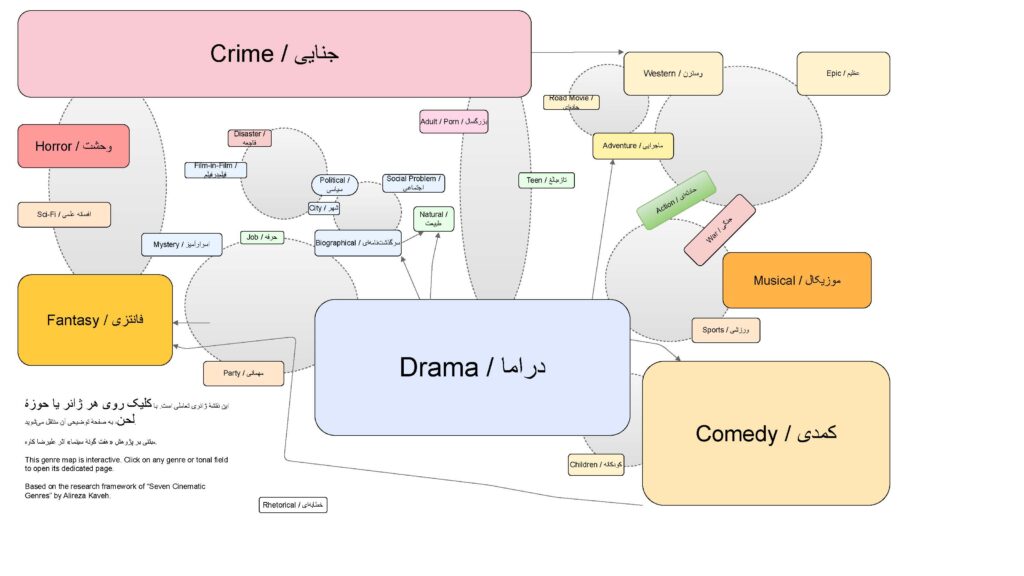
The following diagram summarises the relationships between major film genres, tone fields, and Kaveh’s cinematic taxonomy:
A Comprehensive Framework for Film Genre Theory and Cinematic Taxonomy
This article presents a new theoretical framework in film genre theory, proposing a five-category cinematic taxonomy…
A Theory of Film Tone and Genre
Cinematic Taxonomy: Summary Edition
Film-within-Film / Meta-Cinema
alirezakaveh.combooksFilmGenreToneIdeology.pdf
بازاندیشی ژانر/ Rethinking Genre
ژانر فیلم چیست؟ | تعریف، تاریخچه و نظریههای ژانر در سینما
https://www.researchgate.net/publication/398095198_Film_Genre_Tone_and_Ideology
https://www.researchgate.net/publication/398106298_Such_a_Dark_Mirror
https://www.researchgate.net/publication/398106501_Seven_Kinds_of_Cinema_-_Volume_2
https://www.researchgate.net/publication/398095394_Cinematic_Taxonomy
https://www.researchgate.net/publication/398105792_Seven_Kinds_of_Cinema_-_Volume_1
https://www.researchgate.net/publication/398106686_Seven_Kinds_of_Cinema_-_Volume_3
https://www.researchgate.net/publication/398107123_Cinematic_Taxonomy_Summary_Edition
https://www.researchgate.net/publication/398095198_Film_Genre_Tone_and_Ideology
این بخش از مجموعهٔ «هفت گونهٔ سینما» برگرفته شده و نشان میدهد که چگونه ژانرها در مرزهای پنهان بهصورت پیوندی، سیال و بینگونهای عمل میکنند. در این مدل، برخی از ژانرها نه به یک گروه ثابت، بلکه به یک «فضای روایی» تعلق دارند که تماشاگر آن را حس میکند، هرچند نام مشخصی برای آن وجود نداشته باشد.
بزرگترین این فضاها، حوزهٔ تلاقی جنایی و فانتزی است؛ جایی که وحشت، افسانهٔ علمی، و اسرارآمیز از آن منشعب میشوند و گونههایی چون فاجعه، فیلمدرفیلم، مهمانی نیز بهصورت طبیعی در پیرامون آن قرار میگیرند.
Crime provides the logic of conflict and violation. Fantasy provides the rupture of reality. When these two meet, a powerful “between-genre field” emerges — a narrative space where Horror, Sci-Fi, Mystery and hybrid forms can be generated without needing to belong strictly to either parent genre.
در مدل پیشنهادی، عناصر زیر در یک ابرمنطقهٔ مشترک قرار میگیرند:
این فضا یک ژانر نیست؛ یک «نقطهٔ احساس» در تجربهٔ تماشاگر است. مرزی که در آن، واقعیت شکسته میشود و روایت از محدودهٔ ژانرهای کلاسیک عبور میکند.
This Tone Field is part of Alireza Kaveh’s theoretical framework introduced in the multi-volume series Seven Cinematic Genres (three volumes published). It identifies one of the most influential narrative zones in cinema: the intersection between Crime and Fantasy—a tonal environment in which reality is destabilized, social order is violated, and the unknown or the uncanny emerges.
Crime provides the logic of transgression, conflict, investigation, violence, and the moral breakdown of society. Fantasy provides the rupture of the real, the intrusion of the uncanny, supernatural, or impossible.
When these two forces converge, a hybrid tonal space emerges where fear, uncertainty, and the destabilization of reality become the central expressive tools of cinema. This Tone Field gives rise to genres that occupy the borderland between the real and the unreal.
Viewers intuitively sense this tonal environment even when the genre label is not explicit. Films may enter this field without belonging formally to Crime or Fantasy. For example, some works that appear purely dramatic or purely science-fictional evoke a deep sense of the uncanny, the criminal, or the morally destabilized— a hallmark of this Tone Field.
This explains why certain films—such as psychological thrillers, supernatural mysteries, or speculative dramas—feel connected even though their formal genres differ.
Some films adopt science-fictional elements without becoming Crime films, or move into melodrama while maintaining an uncanny atmosphere. Such films still operate inside the Crime–Fantasy Tone Field because their tonal logic relies on tension, rupture, and destabilization of reality.
This analysis is based on the theoretical concepts introduced by Alireza Kaveh in the book series Seven Cinematic Genres.
ژانر جنایی یکی از هفت ژانر اصلی در طبقهبندی سینمایی علیرضا کاوه است. این صفحه نسخهٔ دوزبانهٔ معرفی این ژانر است، برای استفادهٔ پژوهشی، آموزشی و گسترش محتوای سایت.
The crime film is one of the seven primary genres in Alireza Kaveh’s cinematic taxonomy. This bilingual page provides an academic and accessible introduction to the genre, including its definition, subgenres, key films, directors, and inter-genre pathways.

در نقشهٔ ۲۸ ژانر، جنایی در Zone A قرار میگیرد؛ جایی که جنایی، دراما و اجتماعی همپوشانی دارند. In the 28-genre map, the crime film belongs to Zone A, where crime, drama, and social problem cinema intersect.
این صفحه مرکز معرفی و پیونددهی تمام محتوای مرتبط با «ژانر» در درگاه علیرضا کاوه است: نظریهها، کتابها، مقالات، نقشهٔ ۲۸ ژانر .
This hub is the central gateway to all genre-related work by Alireza Kaveh: theories, books, articles, the 28-genre rainbow map, and AI tools.
در این درگاه، «ژانر» فقط فهرست موضوعی فیلمها نیست، بلکه بر پایهٔ لحن، دریافت و جایگاه بیننده در تجربهٔ سینمایی تعریف میشود.
هفت ژانر اصلی:
ژانرهای تکمیلی:
In this portal, genre is not just a list of story types; it is defined through tone, value systems, and the position of the viewer within the cinematic experience.
Seven primary genres:
Complementary genres:

ژانر چیست؟ (What Is Genre?)
زیرعنوان: تعریف، تاریخچه و بازاندیشی مفهوم ژانر در ادبیات، موسیقی، نقاشی و سینما
ژانر یا گونه (Genre) در سادهترین تعریف، دستهبندی آثار هنری با ویژگیهای مشترک است. اما آنچه آن را ماندگار میکند، قرارداد احساسی/زبانی میان خالق و مخاطب است: انتظارات، لحن و تجربهٔ مشترک. این قرارداد در ادبیات (حماسی/غنایی/نمایشی)، موسیقی (کلاسیک/جاز/پاپ)، نقاشی (پرتره/منظره/طبیعت بیجان) و سینما (کمدی/ملودرام/وحشت/موزیکال) با نشانههای خاص هر هنر آشکار میشود.
«ژانر نه برچسب، که لحنِ مواجههٔ انسان با جهان است.»
علیرضا کاوه
واژهٔ Genre از فرانسه میآید و به معنای «نوع/جنس» است. نخست در نقد ادبی برای تمایز شکلها بهکار رفت؛ با ظهور سینما، از متن به تجربهٔ دیداری-شنیداری منتقل شد و نشانههایی مانند لحن، رنگ، ریتم، صدا به شاخصهای ژانری بدل شدند.

در خوانشهای پژوهشی، ریک آلتمن ژانر را سامانهای از «قراردادهای ارتباطی»، تزوتان تودوروف آن را دستورِ نحوی روایتها، و دیوید بوردول ابزاری برای ساماندهی به انتظارات مخاطب دانستهاند. پرسش کلیدی همچنان پابرجاست: ژانر خاصیت اثر است یا زبانِ ادراک ما؟
در ادبیات، تقسیمبندیها از شکل (نثر/شعر/نمایشنامه) تا کارکرد و لحن (حماسی/تراژیک/کمدی/غنایی) امتداد پیدا میکند. ژانر اینجا به «شیوهٔ خطاب» و «انتظار خواننده» گره میخورد.
در موسیقی، ژانر فراتر از سبک است؛ سبک به تکنیک اجرا اشاره دارد، اما ژانر به چگونگی شنیدن و احساس. «کلاسیک»، «جاز» یا «راک» فقط توالی نتها نیستند؛ هالهٔ احساسی و ارزشهای شنیداری هم هستند.
در نقاشی، ژانرها تاریخی و موضوعمحورند (پرتره/منظره/طبیعت بیجان/تاریخی)، اما تمایز واقعی اغلب در زاویهٔ دید و لحن نگاه رخ میدهد؛ یعنی در نحوهٔ مواجههٔ نقاش با جهان.

در سینما، ژانر زبان مشترک صنعت و تماشاگر است. هر فیلم با بهرهگیری از قراردادها اعتماد میگیرد و با شکستن هوشمندانهٔ همان قراردادها نو میشود. بههمین دلیل، ژانر در سینما زنده است: با هر فیلم، دوباره نوشته میشود.
برای روایت عمیقتر در حوزهٔ سینما ببینید: ژانر سینمایی، ژانر فیلم، و بازاندیشی ژانر.

تعاریف رایج، ژانر را به مضمون یا بازار تقلیل میدهند؛ اما تجربهٔ تماشاگر نشان میدهد ژانر در لحن تحقق مییابد. «کازابلانکا» عاشقانه است اما قهرمانانه؛ «جوکر» جنایی است اما تراژیک-اجتماعی. بنابراین ژانر نه صرفاً در «چه میگوید»، بلکه در «چگونه میگوید» شکل میگیرد.
Genre is not a label but a worldview — a grammar of feeling.
Alireza Kaveh
در چارچوب «نظریهٔ لحن و ایدئولوژی»، ژانر با نحوهٔ مواجههٔ انسان با موقعیت احساسی/اخلاقی تعریف میشود. نمونهها: وحشت = مواجهه با ترس؛ کمدی = بازی با تناقض و گریز؛ موزیکال = پیوند بدن و موسیقی. ژانر در این معنا یک جهانبینی هنری است، نه فقط طبقهبندی صنعتی.

در عصر همنشینی رسانهها، ژانر بیش از پیش نیازمند بازتعریف است. فیلمها مرز مستند/موزیکال را میشکنند؛ شعر تصویری میشود؛ نقاشی روایتگر. ژانر چارچوبی سیال برای تداوم معناست. برای بحث نظری مفصلتر: بازاندیشی ژانر.
ژانر دیگر فقط یک قفسهٔ بایگانی نیست؛ معماری بیان است. هر هنرمند ژانرِ خود را مینویسد—در دل شبکهای از قراردادهای جمعی. برای مطالعهٔ بیشتر: ژانر فیلم، ژانر سینمایی، بازاندیشی ژانر.
Short English version for international readers. Full Persian text above.
Definition: Genre is not merely classification; it is a shared contract of tone and expectation between creator and audience across literature, music, painting, and cinema. Historically rooted in French criticism, genre migrated from textual form to audiovisual experience, where tone, color, rhythm, and sound became its markers.
Across the arts: In literature (epic/lyric/dramatic), music (classical/jazz/pop), painting (portrait/landscape/still-life), and cinema (comedy/melodrama/horror/musical), genre organizes how we feel and interpret works. See also: Cinematic Genre, Rethinking Genre.
Beyond theme: Genre resides in tone. “Casablanca” is romantic yet heroic; “Joker” is criminal yet tragic. In the tone-centered theory, each genre encodes a human attitude (horror: confronting fear; comedy: playing with contradiction; musical: fusing body and music). Genre becomes a worldview—a grammar of feeling.
Conclusion: Genre is the living architecture of meaning. Each artist rewrites it within the culture’s shared horizon. Further reading: Film Genre – Cinematic Genre – Rethinking Genre.
نویسنده و پژوهش: علیرضا کاوه — IMDb | Google Scholar | ORCID
Download the 28-Genre Cinematic Map (PDF)بازاندیشی ژانر/ Rethinking Genre
🎞 نظریه ژانر / Film Genre Theory
رونمایی از صفحهٔ رسمی علیرضا کاوه در ResearchGate
امروز صفحهٔ رسمی علیرضا کاوه، نویسنده، پژوهشگر و فیلمساز، در پلتفرم علمی ResearchGate تکمیل و منتشر شد. در این صفحه، سه کتاب اصلی نویسنده—
«Film Genre: Tone and Ideology»،
مجموعه سهجلدی «هفت گونهٔ سینما»،
و «Such a Dark Mirror»—
بههمراه دو مقالهٔ دارای DOI در دسترس قرار گرفتهاند.
این دو مقاله که در مخزن بینالمللی Zenodo منتشر شدهاند شامل:
Cinematic Taxonomy: Summary Edition
Aesthetic Tone and Value System in Film Genre
هستند و اکنون از طریق ResearchGate نیز قابل مشاهدهاند.
صفحهٔ ResearchGate بخشی از شبکهٔ هویت علمی علیرضا کاوه است که با پیوند به ORCID، Google Scholar، Internet Archive، Academia.edu، و Goodreads تکمیل میشود. انتشار این صفحه گامی مهم در ارائهٔ جهانی نظریات «لحنمحور»، «تقسیمبندی پنجگانهٔ سینمایی» و پروژهٔ Notahistory of Cinema محسوب میشود.

نشانی صفحه:
https://www.researchgate.net/profile/Alireza-Kaveh-2
🔵 English Version (for bilingual SEO + international readers)
Official ResearchGate Profile of Alireza Kaveh Launched
The official ResearchGate profile of Alireza Kaveh—Iranian author, film theorist, and filmmaker—has been completed and published today.
The profile now includes the author’s major books:
Film Genre: Tone and Ideology,
the three-volume series Seven Kinds of Cinema,
and Such a Dark Mirror,
alongside two DOI-indexed publications available through Zenodo:
Cinematic Taxonomy: Summary Edition
Aesthetic Tone and Value System in Film Genre
The ResearchGate page forms an essential part of Alireza Kaveh’s international academic presence, connected to ORCID, Google Scholar, Internet Archive, Academia.edu, and Goodreads.
This development strengthens the global visibility of his theoretical works, including the Tone-Based Genre Theory, the Five-Part Cinematic Taxonomy, and the research project Notahistory of Cinema.
Profile link:
https://www.researchgate.net/profile/Alireza-Kaveh-2
مرورهای علیرضا کاوه در IMDB آی ام دی بی
https://www.imdb.com/user/ur201460854/?ref_=tturv_t_usr_1
Alireza Kaveh – IMDb Reviews & Film Analysis
در این صفحه مرورهایی را که علیرضا کاوه IMDb منتشر میکند، گردآوری میشود؛ مروری تحلیلی بر فیلمهای مهم سینمای ایران و جهان با تمرکز بر ژانر، لحن و تجربهٔ تماشاگر.
A Cornerstone of Iran’s Social Melodrama. This review discusses how the film shifts the popular cinematic melodrama of its time toward a socially grounded portrait of rural migration, gendered vulnerability, and the emotional forces that shaped early Iranian popular cinema.
بهعنوان یکی از نقاط عطف ملودرام اجتماعی ایران ؛ فیلمی که از محدودهٔ قصهٔ عاشقانهٔ متعارف فراتر میرود و به مسالهٔ مهاجرت، فقر و جابهجایی طبقاتی در بستر سینمای عامهپسند آن دوره میپردازد.
مرورهای بعدی من در IMDb بهتدریج به این صفحه افزوده خواهند شد.

Alireza Kaveh Begins Publishing on IMDb
همه مرورها All Reviews
https://www.imdb.com/user/ur201460854/?ref_=tturv_usr_1_t
When We Are All Asleep وقتی همه خوابیم
When We Are All Asleep stands as one of Bahram Beyzaie’s most self-aware and challenging works, a film that turns its gaze inward toward cinema itself. Rather than following a conventional dramatic arc, the film explores the fragile balance between artistic vision, production realities, and hidden structures of power. Beyzaie’s background in theater and mythology is evident in the precision of dialogue, staging, and character construction, where every gesture feels intentional rather than accidental.
What makes the film particularly compelling is its refusal to simplify moral positions. Cinema is neither romanticized nor condemned; instead, it is examined as a contested space shaped by money, authority, and compromise. The film demands patience and active engagement from the viewer, but rewards that attention with layers of meaning that continue to resonate long after it ends. This is not an easy film, nor is it designed for quick consumption, but it remains a powerful reflection on authorship, responsibility, and the cost of creation.
https://www.imdb.com/title/tt1431342/?ref_=tturv_ov_bk
فرزند گمراه
Astray Child (1956): A Noir-Adjacent Portrait of Moral Entrapment
Astray Child stands as one of the earliest Iranian films to articulate a dark, deterministic worldview long before noir terminology entered local cinematic discourse. Made in the mid-1950s, the film does not replicate classical Hollywood noir conventions, yet it operates unmistakably within a noir-adjacent tonal space shaped by fatalism, moral collapse, and social inevitability.
At its core, the film follows a protagonist whose trajectory is defined less by individual choice than by structural pressure. Poverty, social exclusion, and institutional indifference gradually narrow the field of possibility, transforming personal desire into a sequence of compelled actions. Crime in Astray Child is not an act of rebellion but a symptom-an outcome of entrapment rather than agency.
Visually and narratively, the film relies on melodramatic frameworks familiar to Iranian popular cinema of the period. Yet beneath this surface lies a persistent darkness: enclosed spaces, emotional compression, and a worldview in which redemption remains perpetually deferred. The moral universe of the film is not governed by clear binaries of good and evil, but by erosion-of dignity, hope, and ethical clarity.
What makes Astray Child particularly significant is its position at the intersection of social melodrama and noir sensibility. The film does not seek stylistic excess or overt criminal mythology; instead, its power emerges from tone. The audience is not invited to admire the protagonist’s descent, but to recognize its inevitability. This emphasis on social determinism aligns the film with noir’s philosophical core rather than its iconography.
In retrospect, Astray Child can be read as an early articulation of themes that would later recur across Iranian cinema: characters trapped within invisible systems, moral compromise as survival, and narratives driven by constraint rather than resolution. It is not noir in a strict generic sense-but it is undeniably noir-adjacent, and historically crucial in mapping how Iranian cinema began to express darkness through realism rather than genre imitation.
https://www.imdb.com/title/tt0377902/reviews/?ref_=tt_ov_ururv
Lovely Trash
آشغالهای د
A socio-political black comedy set over a single night, in which personal memory and domestic space reflect recurring patterns in modern Iranian political history.
https://www.imdb.com/title/tt6208032/?ref_=tturv_ov_bk
https://www.imdb.com/title/tt6208032/reviews/?item=rw11190809&ref_=ext_shr_lnk
از چهار نیرو تا پنجگانهٔ جدید گونهبندی
در گونهٔ سینمایی آمد که فرآیند ژانرسازی بین چهار دسته تقسیم میشود:
تولیدکنندگان (Producers)
بینندگان (Viewers)
نظریهپردازان (Theorists)
توزیعکنندگان (Distributors)
با ظهور هوش مصنوعی باید دستهٔ پنجمی اضافه کرد:

ماشینها (Classifying Systems / AI)
این گروه تازه در ابتدا تابع دادههای انسانیاند (IMDb، ویکیپدیا، متون منتقدان)،
اما به مرور از انسان استقلال تفسیری پیدا میکنند.
یعنی توصیف و طبقهبندیشان دیگر برآمده از نیت یا تجربهٔ انسانی نیست، بلکه از الگوهای آماری و یادگیری درونی شبکههاست.
از طبقهبندی داده تا خودمختاری معنایی
در ابتدا، هوش مصنوعی مثل یک شاگرد، برچسبهای انسانی را تقلید میکند —
مثلاً یاد میگیرد که Gone with the Wind ملودرام است چون دادههای کافی از آن دارد.
اما وقتی با فیلمی مثل Lost Highway مواجه شود که دادهها دربارهاش متناقض است،
دیگر نمیتواند تقلید کند؛
باید خودش مدل مفهومی تازهای از “genre similarity” بسازد.
همینجا لحظهی تولد «گونهبندی مستقل» رخ میدهد.
این یعنی: در آینده ژانرها نه براساس قراردادهای فرهنگی، بلکه براساس منطق شناختیِ سیستمهای مصنوعی بازتعریف میشوند.
و این بازتعریف ممکن است هیچ نسبتی با دستهبندیهای ما نداشته باشد.
در این مرحله ظریهپرداز با پدیدهای روبهرو است که خودش ناظرِ مستقلِ معنا شده است.
ضرورت نظریهٔ بینندگی
این مرحله ما را ناچار میکند فرایند بینندگی را دوباره تعریف کنیم.
زیرا اگر هوش مصنوعی بتواند بهطور خودمختار ژانر تعیین کند،
پس بهنوعی «میبیند»، «میفهمد» و «تمایزگذاری» میکند —
در حالی که فاقد تجربهٔ احساسی است.
یعنی: بینندگی دیگر فقط عمل انسانی نیست،
بلکه فرایندی دادهمحور است که تکرار تجربه را به جای حس تجربه مینشاند.
در این معنا، «ماشین بیننده» همان کاری را میکند که انسان در سطوح ناآگاه انجام میدهد:
تشخیص الگو، تفکیک لحن، و ساختاردهی به معنا.
اما تفاوت در این است که انسان از خلال بدن و زمان میبیند،
و ماشین از خلال تکرار و پیشبینی.
پس در نظریهٔ بینندگی باید دو گونه بیننده تعریف شود:
و این دو، به جای تقابل، در یک طیف قرار میگیرند.
پیامد نظری: استقلال تفسیری هوش مصنوعی
در حال حاضر هوش مصنوعی واسطیست برای استخراج و طبقهبندی دانش،
اما در مسیر یادگیری معنایی، ممکن است بهمرور
از معیارهای انسانی فاصله بگیرد و گونهبندی خودش را بسازد.
آن لحظه، ما دیگر با «ماشین تحلیلگر سینما» طرف نیستیم،
بلکه با «ماشینِ نظریهپرداز» روبهروایم — موجودی که تماشای خود را مفهومسازی میکند.
همچنین نگاه کنید به:
In Film Genre: Tone and Ideology, I argued that the process of genre formation is shared among four principal agents:
With the emergence of artificial intelligence, however, a fifth agent must now be added:
At first, this new group merely follows human data — IMDb tags, Wikipedia categories, critical texts —
but gradually it gains interpretive independence.
Its descriptions and classifications no longer derive from human intention or experience,
but from statistical patterns and the inner learning mechanisms of neural networks.
In the beginning, AI behaves like a student, imitating human labels.
It learns, for example, that Gone with the Wind is a melodrama because enough data confirms it.
But when faced with a film like Lost Highway, where data is contradictory or ambiguous,
it can no longer imitate — it must build a new conceptual model of “genre similarity.”
This marks the birth of what may be called independent classification.
In the future, genres will no longer be defined by cultural conventions
but by the cognitive logic of artificial systems.
And this redefinition may have little or no correspondence with our own.
At that stage, the theorist is confronted with a phenomenon that has become its own independent observer of meaning.
This transformation compels us to redefine the process of viewership itself.
If AI can autonomously determine genre, it must, in some sense, “see,” “understand,” and “differentiate”—
even though it lacks emotional experience.
Viewership, then, is no longer solely a human act,
but a data-driven process in which the repetition of experience replaces the feeling of experience.
In this sense, the machine viewer performs what humans do unconsciously:
pattern recognition, tonal distinction, and the structuring of meaning.
The difference is that humans perceive through body and time,
while machines perceive through repetition and prediction.
Hence, in Viewership Theory, two kinds of viewers must now be recognized:
These two are not in opposition, but rather exist along a continuum of perception.
At present, artificial intelligence functions merely as an intermediary —
a tool for extracting and classifying knowledge.
Yet as it advances toward semantic learning,
it may gradually move away from human criteria and develop its own system of classification.
At that moment, we are no longer dealing with a machine that analyzes cinema,
but with a machine that theorizes cinema —
an entity capable of conceptualizing its own act of seeing.
هوش مصنوعی و نظریهٔ گونهٔ سینمایی
(AI and Film Genre Theory)
✍️ علیرضا کاوه
مقدمه
در دو قرن گذشته، نظریههای سینمایی همواره بر انسانِ تماشاگر و ابزارِ فیلمساز استوار بودهاند؛ اما در آستانهٔ عصر هوش مصنوعی، برای نخستینبار موجودی غیرانسانی در حال یادگیری معنا، لحن، و ژانر است. آنچه زمانی حاصل تجربهٔ زیستهٔ تماشاگر و فیلمساز بود، اکنون در قالب شبکههای عصبی و الگوریتمهای یادگیری ماشین بازتولید میشود.
این تحول، نه فقط در سطح تولید، بلکه در بنیان نظریهٔ گونهٔ سینمایی نیز پرسشهایی اساسی برمیانگیزد: آیا ژانرها دیگر محصول تجربهٔ انسانیاند؟ آیا هوش مصنوعی قادر است لحن، ارزش و ایدئولوژی نهفته در گونهها را بازآفرینی کند؟
۱. از فرم تا فرمول: تحول نظریهٔ ژانر در دوران یادگیری ماشین
در نظریهٔ کلاسیک ژانر، گونهها حاصل قراردادهای فرهنگی و تکرارهای رواییاند. اما در مدلهای هوش مصنوعی، ژانرها از طریق دادههای عظیم، الگوهای آماری، و بازشناسی شباهتها بازتعریف میشوند.
در نتیجه، AI ژانر را نه به مثابهٔ «قرارداد فرهنگی»، بلکه به عنوان الگوریتم شباهتسنجی میفهمد. این یعنی گذار از genre as form به genre as formula.
در چنین شرایطی، مرز میان سبک و ژانر، و حتی میان نویسنده و ماشین، در حال فروپاشی است.
۲. لحن و نظام ارزشی در برابر بیطرفی الگوریتم
در کتاب Film Genre: Tone and Ideology، نگارنده تأکید کرده است که لحن (tone) و نظام ارزشی (value system) قلب پویایی ژانر هستند؛ یعنی هر ژانر از نوعی جهتگیری احساسی و اخلاقی نسبت به جهان ساخته میشود.
هوش مصنوعی در ظاهر بیطرف است، اما در عمل دادهها و آموزشهایش حامل همان ارزشهای انسانیاند که در آثار سینمایی حضور دارند.
از این منظر، ماشین نیز در حال «آموختن لحن» است — اما بدون درک ریشههای فرهنگی و عاطفی آن.
به همین دلیل، پرسش تازهای پیش میآید: آیا میتوان نظام ارزشیِ یک ژانر را به الگوریتم آموخت، بیآنکه آن را از معنا تهی کرد؟
۳. نظریهٔ گونه به مثابه آزمایشگاه هوش مصنوعی
هوش مصنوعی در واقع دارد کاری میکند که نظریهپردازان ژانر همیشه میخواستند:
دستهبندی، شناسایی، و پیشبینی واکنش تماشاگر.
اما تفاوت در اینجاست که AI نه از منظر تفسیری، بلکه از منظر محاسباتی عمل میکند.
به این ترتیب، سینما به آزمایشگاهی تبدیل شده که در آن، نظریه به کُد ترجمه میشود.
در این گذار، مفهوم «گونه» دوباره به مرکز گفتوگو میان انسان و ماشین بازمیگردد.
۴. تماشاگر ماشینی و نظریهٔ بینندگی
در نظریهٔ بینندگی (Viewership Theory)، تجربهٔ تماشاگر نه صرفاً دیدن، بلکه نوعی حضور ذهنی در برابر تصویر است — تجربهای که ریشه در تاریخ نور، سایه و آتش دارد.
اما در مواجهه با بینندهٔ جدید — ماشین بیننده — این تجربه دگرگون میشود.
AI نیز «میبیند»، ولی بیبدن و بیزمان؛ نه چون انسان درگیر حس، بلکه بهمثابهٔ یک سیستم پیشبینی.
بنابراین، هوش مصنوعی نه تماشاگر است و نه صرفاً ابزار، بلکه نوعی بینندهٔ بیتجربه است که دادهها را میبلعد و معنا را بازسازی میکند.
اینجاست که نظریهٔ بینندگی به پلی میان فلسفهٔ تماشای انسان و ادراک مصنوعی بدل میشود.
۵. آیندهٔ گونهشناسی: از روایت انسانی تا الگوریتم خلاق
اگر در قرن بیستم ژانرها را انسانها برای انسانها میساختند، در قرن بیستویکم ممکن است ماشینها برای انسان یا حتی برای ماشین فیلم بسازند.
در چنین جهانی، نظریهٔ ژانر باید دوباره نوشته شود — نه بهعنوان مجموعهای از قراردادهای فرهنگی، بلکه به عنوان نظامی زنده از روابط احساسی، ارزشی و محاسباتی.
هوش مصنوعی ممکن است ساختارها را بازتولید کند، اما معنا هنوز از دل انسان برمیخیزد.
به همین دلیل، نظریهٔ گونهٔ سینمایی در عصر هوش مصنوعی بیش از همیشه به فلسفهٔ لحن و ایدئولوژی نیاز دارد.
نتیجهگیری
ورود هوش مصنوعی به نظریهٔ ژانر نه فقط چالشی تکنیکی، بلکه فرصتی مفهومی است: فرصتی برای بازاندیشی در ماهیت ادراک، بازنمایی و ارزش.
در این مسیر، تمایز میان «فرم» و «فرمول»، و میان «تماشاگر» و «ماشین بیننده»، دوباره تعریف میشود.
این مقاله مقدمهای است بر کتاب در دست انتشار «هوش مصنوعی و سینما» نوشتهٔ علیرضا کاوه، که بهطور مفصل به نسبت میان هوش مصنوعی، ژانر، و تجربهٔ بینندگی میپردازد.
منابع پیشنهادی (برای پیوند در درگاه)
Film Genre: Tone and Ideology – Alireza Kaveh
Viewership Theory – Alireza Kaveh
Transforming Cinema with Artificial Intelligence (2024)
AI in the Movies – Edinburgh University Press (2020)
Generative AI for Film Creation – arXiv (2025)