What Is a Film Genre?

A New Approach to Film Genre Theory: Cinematic Taxonomy and Tone-Based Analysis

What Is a Film Genre? – A Comprehensive Framework

By Alireza Kaveh

1. Introduction

Film genre is one of the most fundamental concepts in film studies. While genre is traditionally associated with narrative patterns, stylistic conventions, and audience expectations, contemporary approaches view it as a complex system shaped by emotional tone, ideological structures, cultural history, and cinematic form.

This article outlines major definitions of film genre, discusses long-standing problems in classical genre theory, and introduces the emerging tone-based model proposed by Iranian theorist Alireza Kaveh.

2. Definition of Film Genre

A film genre is typically defined as a recognizable category of films that share structural, narrative, stylistic, or thematic patterns. Conventional definitions emphasize:

  • Repeated narrative formulas and character types
  • Recurrent conflicts and resolutions
  • Stylistic consistency in lighting, editing, and cinematography
  • Audience expectations and marketing labels
  • Cultural positioning within a given film industry
  • Historical development of cycles and subgenres

Limitations of Classical Definitions

Despite their usefulness, classical definitions cannot fully account for:

  • Hybrid and borderline forms
  • Genre mixing and tonal shifts
  • Cross-cultural differences in audience perception
  • Overlaps between genre, style, and narrative form
  • The role of medium, format, and tradition

These limitations reveal deeper theoretical gaps and motivate alternative frameworks such as semantic/syntactic theory, cognitive genre studies, and tone-centered approaches.

3. Problems in Genre Theory

Traditional Western genre theory has faced several enduring problems:

  • Narrative reductionism – overemphasis on plot at the expense of emotional perception.
  • Stylistic overgeneralization – assuming that style alone defines genre.
  • Cultural bias – applying Hollywood-based categories universally.
  • Instability of boundaries – genres overlap, fragment, or transform over time.
  • Inconsistent terminology – confusion between genre, mode, tone, style, and format.

These issues encourage the development of more flexible and globally aware models, including the Cinematic Taxonomy and tone-based frameworks.

4. Distinguishing Tone from Mood

Many filmmaking manuals emphasize the distinction between tone and mood, often in practical production terms. In academic genre theory, however, tone is treated as a broader conceptual category.

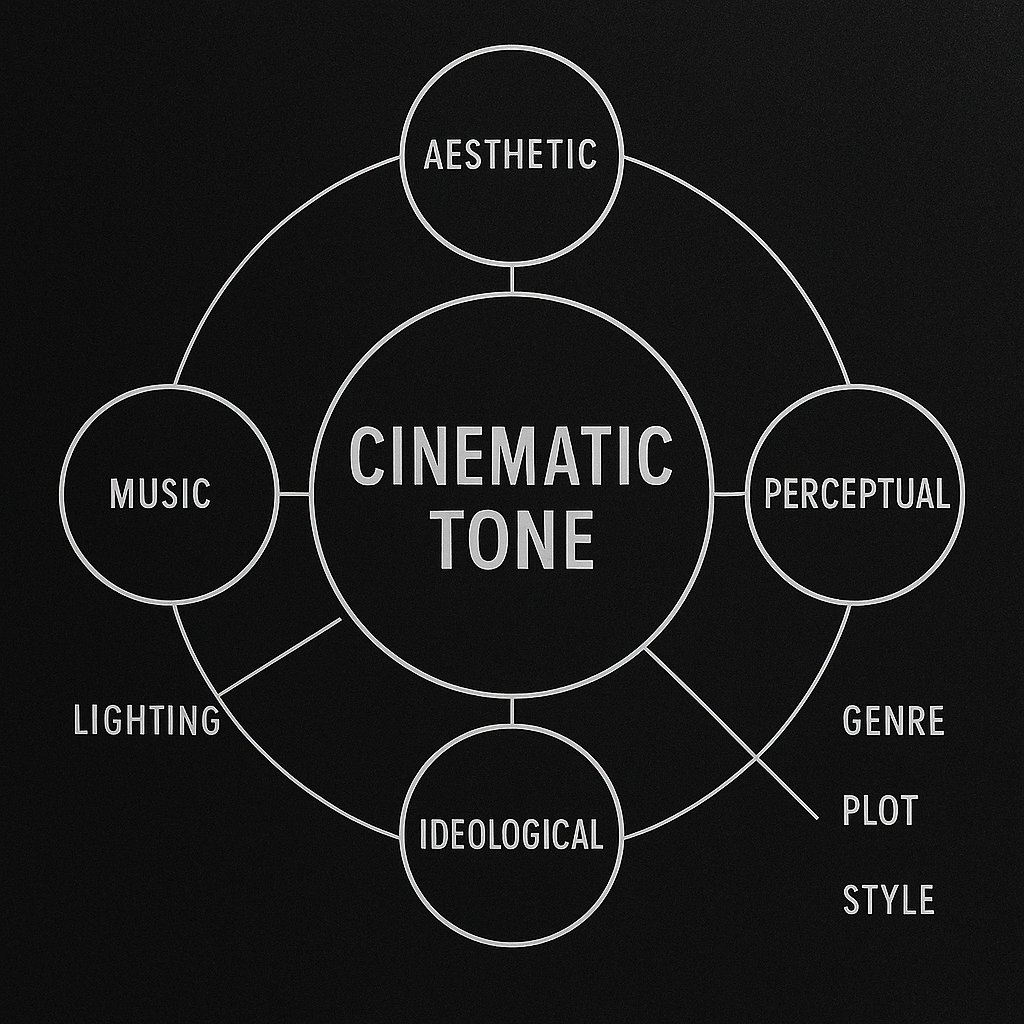
Mood is temporary and scene-based, shaped by lighting, music, color, or performance. It describes how a particular moment feels. Tone, by contrast, is structural and sustained: it shapes the film’s overall emotional stance, ideological position, and perceptual field.

In Alireza Kaveh’s framework, tone functions as the emotional–ideological register of a film, influencing how genres interact, overlap, or transform. This allows genre to be understood not only as form or narrative, but as a cultural and perceptual structure. (For a detailed discussion see Film Tone (Tone in Cinema) and Tone and Ideology.)

5. The Five-Category Cinematic Taxonomy

As an alternative to conventional genre theory, Kaveh introduces a Five-Category Cinematic Taxonomy that clarifies the relationship between genre and adjacent concepts:

  1. Medium – the sensory and technological basis of cinema.
  2. Style – the aesthetic organization of images, sounds, and rhythms.
  3. Genre – recurring narrative and tonal structures.
  4. Format – industrial and formal configurations (feature film, series, short, etc.).
  5. Tradition – cultural-historical patterns, rituals, and national cinemas.

This taxonomy helps separate overlapping terms and prevents genre from being confused with style, medium, or format. It also provides a flexible framework for comparing Hollywood and non-Western cinemas.

6. Tone and Ideology

In Kaveh’s model, genre cannot be fully understood without acknowledging ideological framing, emotional expectation, and cultural codes. Genres such as melodrama, horror, comedy, or fantasy are not merely narrative categories; they carry specific ideological tones that shape audience experience.

Tone therefore becomes a bridge between:

  • Emotional perception and affect
  • Cultural meaning and ideological values
  • Narrative and stylistic structures
  • Audience expectation and genre recognition

This approach is elaborated in the book Film Genre: Tone and Ideology.

7. A Non-Western Perspective

Beyond Western models, Kaveh emphasizes the cultural specificity of genre development in Asian, Middle Eastern, and particularly Iranian cinema. Genres in non-Western traditions often draw from:

  • Ritual forms and religious ceremonies
  • Oral storytelling and epic poetry
  • Musical heritage and folk performance
  • Collective memory and political history
  • Locally specific viewing practices

This perspective expands genre theory beyond Hollywood-centric taxonomies and supports a more genuinely global understanding of film genre.

8. Academic Resources (PDF Downloads)

Downloadable resources for further study:

9. About the Author

Alireza Kaveh is an Iranian filmmaker and theorist whose work explores cinematic genre, tone-based analysis, and cultural frameworks in Iranian and global cinema. His theoretical contributions include the Five-Category Cinematic Taxonomy, the Tone and Ideology framework, and cross-cultural genre studies.

Academic profiles: Google Scholar · ORCID · ResearchGate

10. Frequently Asked Questions

Is film genre only about narrative?

No. Genres involve narrative, thematic, stylistic, and tonal elements. A genre can be recognized by its patterns of story, character, visual style, and emotional tone.

What makes Kaveh’s taxonomy different?

It separates overlapping concepts (genre, style, tone, format, tradition) and offers a flexible global model that can be applied to both Hollywood and non-Western cinemas.

Is tone part of a film’s genre?

Tone functions as a structural emotional–ideological layer that shapes how we experience genre. Two films may share a similar plot but belong to different genres if their tonal fields are distinct.

Is this approach accepted in global film studies?

It emerges as a non-Western perspective in genre theory and is increasingly used in discussions of global cinema, especially in relation to Iranian and Middle Eastern film traditions.

11. Visual Diagram

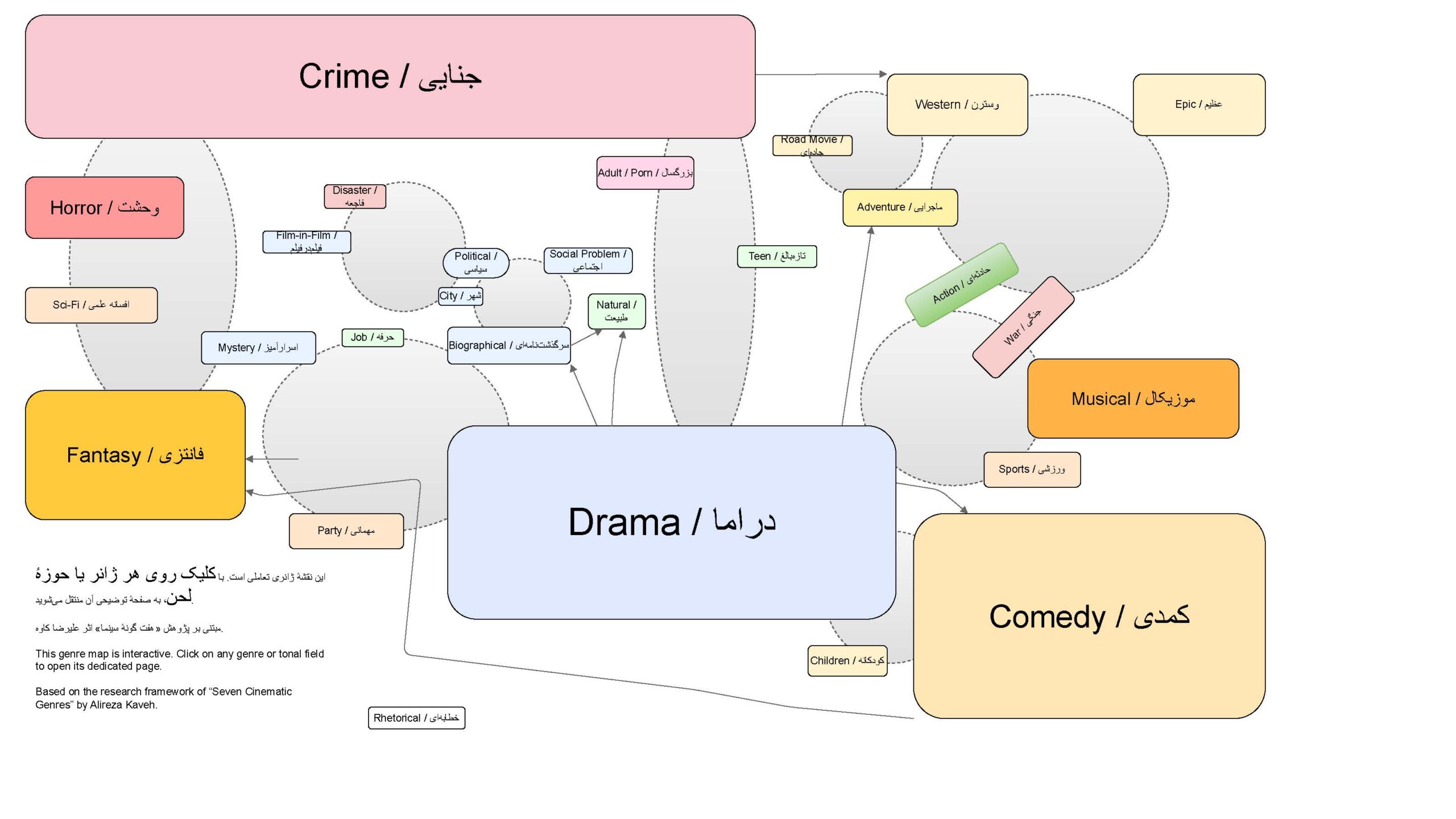
The following diagram summarises the relationships between major film genres, tone fields, and Kaveh’s cinematic taxonomy:

Diagram of film genres and tone-based cinematic taxonomy
Diagram: A comprehensive framework for film genre, tone, and cinematic taxonomy.

A Comprehensive Framework for Film Genre Theory and Cinematic Taxonomy


This article presents a new theoretical framework in film genre theory, proposing a five-category cinematic taxonomy…

https://www.researchgate.net/publication/398711350_A_Theory_of_Film_Tone_and_Genre_From_Aesthetic_Mood_to_Ideological_Structure

A Theory of Film Tone and Genre

Cinematic Taxonomy: Summary Edition

Film-within-Film / Meta-Cinema

alirezakaveh.combooksFilmGenreToneIdeology.pdf

ژانر سینمایی چیست؟

بازاندیشی ژانر/ Rethinking Genre

ژانر فیلم چیست؟ | تعریف، تاریخچه و نظریه‌های ژانر در سینما

https://www.researchgate.net/publication/398095198_Film_Genre_Tone_and_Ideology

https://www.researchgate.net/publication/398106298_Such_a_Dark_Mirror

https://www.researchgate.net/publication/398106501_Seven_Kinds_of_Cinema_-_Volume_2

https://www.researchgate.net/publication/398095394_Cinematic_Taxonomy

https://www.researchgate.net/publication/398105792_Seven_Kinds_of_Cinema_-_Volume_1

https://www.researchgate.net/publication/398106686_Seven_Kinds_of_Cinema_-_Volume_3

https://www.researchgate.net/publication/398107123_Cinematic_Taxonomy_Summary_Edition

https://www.researchgate.net/publication/398258336_AI_and_Cinema_A_Foundational_Note_on_Tool_Behavior

https://www.researchgate.net/publication/398095198_Film_Genre_Tone_and_Ideology

https://www.researchgate.net/publication/398436319_The_28-Genre_Cinematic_Map_Based_on_the_Cinematic_Taxonomy_of_Alireza_Kaveh

نقشه‌ها / Maps & Diagrams

«نقشه‌ها / Maps & Diagrams»

در این صفحه مجموعه‌ای از نقشه‌ها، دیاگرام‌ها، و ساختارهای بصری مرتبط با پروژه‌های پژوهشی، کتاب‌ها و نظریه‌های سینمایی علیرضا کاوه قرار گرفته است.
این نقشه‌ها بخشی از فرایند شکل‌گیری ایده‌ها، سازمان‌دهی مفاهیم، و توضیح روابط میان اجزای نظریه‌ها هستند و معمولاً در بخش‌های مختلف پژوهش، تدریس، و تولید فیلم مورد استفاده قرار می‌گیرند.

نقشه‌ها شامل موارد زیر هستند:

گونه‌شناسی سینمایی و نقشه‌های ۲۸ ژانر

نقشه‌های نظری پروژهٔ «ناتاریخ سینما»

دیاگرام‌های مرتبط با پروژهٔ «سه خواهر»

ساختارهای طبقه‌بندی (Taxonomy) و مدل‌های دریافت (Viewership Theory)

شکل‌سازی‌ها و نمودارهای مرتبط با کتاب‌ها، مقالات و سخنرانی‌ها

این نقشه‌ها به‌عنوان بخشی از «رسانهٔ علمی» سایت، به مرور زمان تکمیل و به‌روزرسانی خواهند شد.
برای هر نقشه، در صورت وجود، نسخهٔ PDF، فایل اصلی draw.io یا لینک دانلود باکیفیت نیز قرار داده می‌شود.


This page contains a curated collection of maps, diagrams, and visual structures related to the research projects, books, and cinematic theories of Alireza Kaveh.
These diagrams represent conceptual frameworks, structural models, and analytical tools used throughout the development of genre theory, viewership theory, and cinematic classification.

The collection includes:

Genre Maps and the 28-Genre Structure

Conceptual diagrams from the “Notahistory of Cinema” project

Story and production diagrams from the “Three Sisters” film project

Taxonomy models and Viewership Theory structures

Visual frameworks used in lectures, articles, and publications

Each map will be updated over time, and when available, PDF versions, high-resolution files, or the original draw.io files will be provided for download.

نقشهٔ تعاملی درگاه — نسخهٔ رمزنگار
نقشهٔ تعاملی درگاه
راهنما بازچینی
شاخهٔ اصلی زیرشاخه

PDFها / Documents

PDFها / Documents

در این صفحه مجموعه‌ای از فایل‌های PDF مرتبط با آثار، پژوهش‌ها، کتاب‌ها و پروژه‌های سینمایی علیرضا کاوه قرار دارد.
این بخش با هدف ایجاد یک آرشیو منظم و قابل‌دسترسی طراحی شده است تا مخاطبان، پژوهشگران و دانشجویان بتوانند به‌سادگی به نسخه‌های تکمیلی، اسناد همراه، و منابع قابل دانلود دسترسی داشته باشند.

این مجموعه شامل:

PDFهای معرفی کتاب‌ها و پروژه‌ها

نسخه‌های ارائه و اسلایدهای سخنرانی‌ها

مقالات پژوهشی و گزیده‌های منتشرشده

نسخه‌های قابل چاپ از نمودارها و نقشه‌های نظری

اسناد مرتبط با پروژه‌های «سه خواهر»، «ناتاریخ سینما» و «گونه‌شناسی سینمایی»

تمام فایل‌ها به مرور زمان افزوده و به‌روزرسانی می‌شوند.
در صورت انتشار رسمی هر پروژه، نسخهٔ PDF یا لینک DOI معتبر نیز در این بخش قرار خواهد گرفت.

Text:
This page provides an organized archive of PDF documents related to the books, research projects, academic writings, and cinematic works of Alireza Kaveh.
The purpose of this section is to create an accessible and well-structured library for readers, researchers, and students who may need downloadable or printable versions of various materials.

The collection includes:

Project overviews and book introduction PDFs

Lecture slides and presentation documents

Published articles, research excerpts, and academic summaries

Printable versions of theoretical maps and diagrams

Documents related to “Three Sisters”, “Notahistory of Cinema”, and “Cinematic Genre Studies”

All documents will be updated regularly, and when available, DOI links, official publication files, and high-resolution PDFs will be added to this archive.

گونه چیست

Film Genre: Tone and Ideology

Cinematic Taxonomy: Summary Edition

Cinematic-Genre-Map-28-By-Alireza-Kaveh.pdf

AI and Film Genre Theory

Fantasy–Crime Threshold Tone Field

حوزهٔ لحن ۹ Fantasy–Crime Threshold Tone Field

حوزهٔ لحن ۹ یکی از پرهماسه‌ترین و چندمنطقه‌ای‌ترین حوزه‌ها در نظریهٔ ۲۸ گونهٔ سینمایی علیرضا کاوه است. این حوزه در مجاورت مستقیم جنایی و فانتزی قرار دارد و با یک میانجی به دراما متصل می‌شود. همین وضعیت، آن را به یک آستانهٔ لحنی تبدیل کرده است؛ جایی که نیروهای مخالف و مکمل در رفت‌وآمد هستند.

اعضای اصلی حوزه

  • فیلم‌در‌فیلم (Film-in-Film)
  • فاجعه (Disaster)
  • سیاسی (Political)
  • شهر (City)

فیلم‌در‌فیلم و نزدیکی به فانتزی

بسیاری از فیلم‌های فیلم‌در‌فیلم، بوی فانتزی می‌دهند، زیرا ساختار آن‌ها متکی بر آگاهی از خود، توهم، بازتابندگی و شکستن واقعیت است؛ عناصری که در فانتزی و جنایی نیز حضور دارند.

فاجعه و وابستگی دوگانه

فاجعه (به‌ویژه در گونهٔ همه‌گیری) هم به فانتزی (بزرگ‌نمایی، امر غیرواقعی، فروپاشی) و هم به جنایی (مدیریت بحران، بزه، کنترل اجتماعی) تعلق دارد. در حوزهٔ ۹، فاجعه با شدتی بالا به این دو نیرو متصل می‌شود.

نقش سیاسی و شهر

گونه‌های سیاسی و شهر که عضوی از حوزهٔ ۸ نیز هستند، در این حوزه رنگ درامی–فانتزی–جنایی دریافت می‌کنند و آن را نیز به حوزهٔ ۸ منتقل می‌کنند. این تبادلِ دوطرفه باعث ایجاد یک پیوند ساختاری قدرتمند میان دو حوزه می‌شود.

جایگاه طبیعت

طبیعت (Natural) در سوی مقابل، نزدیک به دراما و سرگذشت‌نامه‌ای قرار دارد، اما بدون عضویت در هیچ حوزهٔ لحنی. در اینجا نقش یک ژانر پیرامونی را بازی می‌کند که از فاجعه فاصلهٔ کوتاهی دارد، اما در ترکیب اصلی حضور ندارد.

پیکربندی لحنی حوزهٔ ۹

  • ورود مستقیم از جنایی → خشونت، کنترل، بزه
  • ورود مستقیم از فانتزی → توهم، اغراق، شکستن واقعیت
  • ورود غیرمستقیم از دراما → انگیزه انسانی، بحران، روایت
  • ورود از سیاسی و شهر → قدرت، مدیریت، جامعهٔ مدرن

پیوندهای مرتبط

Tone Field IX Fantasy–Crime Threshold Tone Field

Tone Field IX is one of the most multi-bordered, densely connected tonal zones in Alireza Kaveh’s 28-genre framework. It lies in direct adjacency to Crime and Fantasy, while reaching Drama through an intermediary tonal passage.

Core Genres in This Field

  • Film-in-Film
  • Disaster
  • Political
  • City

Film-in-Film and Its Affinity with Fantasy

Many film-in-film works carry a distinct fantasy scent — due to self-awareness, reflexivity, broken reality, and narrative illusion. These traits place the genre close to both Fantasy and Crime.

Disaster and Dual Belonging

Disaster cinema, especially pandemic narratives, belongs simultaneously to Fantasy (collapse, the impossible) and Crime (control, violation, systemic breakdown). In Tone Field IX, this duality is amplified.

Political and City as Cross-Field Carriers

The genres Political and City, which also belong to Tone Field VIII, act here as tonal carriers — bringing social, ideological, and urban dynamics into the Fantasy–Crime threshold and transporting tonal elements back into Field VIII.

Relation to Natural

The Natural genre remains outside formal Tone Fields, positioned near Drama and Biography, yet it sits at a short distance from Disaster within this field without participating directly in the tonal cluster.

Tonal Configuration

  • From Crime: danger, control, breakdown, violation
  • From Fantasy: distortion, exaggeration, altered reality
  • From Drama (indirect): human motivation, crisis
  • From Political/City: governance, ideology, modernity

Related Links

Reality–Power–Society Tone Field

حوزهٔ لحن ۸ Reality–Power–Society Tone Field

حوزهٔ لحن ۸ برخلاف بسیاری از حوزه‌های دیگر، مستقیماً از سه گونهٔ اصلی منشعب نشده اما مجموعه‌ای از گونه‌های قدرتمند را در خود جای می‌دهد که با دراما و ساختارهای اجتماعی و قدرت نسبت مستقیم دارند. این حوزه، منطقه‌ای‌ست که در آن زندگی واقعی، جامعه، سیاست و شهر تلاقی می‌کنند.

مهم‌ترین اعضای این حوزه عبارت‌اند از: سرگذشت‌نامه‌ای (Biographical)، سیاسی (Political)، اجتماعی (Social)، و شهر (City).

سرگذشت‌نامه‌ای که از دراما مشتق شده، در این میدان در کنار سیاسی و اجتماعی و شهر جای می‌گیرد. سیاسی و اجتماعی که گاه اشتباه یکی پنداشته می‌شوند، در این نظریه دو جایگاه لحنی مجزا دارند، هرچند هر دو در حوزهٔ ۸ ساکن‌اند.

ارتباط با حوزهٔ ۹

دو گونهٔ سیاسی و شهر علاوه بر عضویت در حوزهٔ ۸، در حوزهٔ لحن ۹ نیز نقش فعالی دارند؛ زیرا فضای قدرت و ساختار شهری را به لحن آن حوزه منتقل می‌کنند.

جایگاه گونهٔ «طبیعت»

گونهٔ طبیعت (Natural) از دراما و سرگذشت‌نامه‌ای مشتق شده، اما عضو هیچ حوزهٔ لحنی نیست و به‌صورت یک ژانر پیرامونی در مجاورت حوزهٔ ۸ قرار دارد. این ژانر بر تجربهٔ زیستی، محیط، و بدن انسانی استوار است.

گونه‌های اصلی این حوزه

  • سرگذشت‌نامه‌ای / Biographical
  • سیاسی / Political
  • اجتماعی / Social
  • شهر / City

پیوندهای مرتبط

Tone Field VIII Reality–Power–Society Tone Field

Unlike many other Tone Fields in this system, Tone Field VIII is not directly derived from the three primary genres. Instead, it brings together a group of influential secondary genres whose tonal identity emerges from the intersection of Drama, society, power, and urban life.

The principal genres residing in this field are: Biographical, Political, Social, and City. Each of these genres constructs a different dimension of human reality—personal, collective, ideological, or urban.

Biographical cinema, originally derived from Drama, occupies this field alongside Political and Social genres. Political and Social films are often confused with one another, but in this theoretical system they hold distinct tonal positions while sharing membership in this domain.

Relation to Tone Field IX

The genres Political and City participate not only in this field but also in Tone Field IX, where they extend themes of power, governance, and urban modernity into another tonal cluster.

The Peripheral Role of the Nature Genre

The Natural genre, derived from Drama and Biographical modes, remains outside all formal Tone Fields but stays in close adjacency to Field VIII. It represents bodily experience, environment, and non-fictional presence rather than a structured tonal logic.

Genres in This Field

  • Biographical
  • Political
  • Social
  • City

Related Links

Drama–Mystery Tone Field

حوزهٔ لحن ۷ Drama–Mystery Tone Field

این حوزهٔ لحن در نقطهٔ تماس دراما و اسرارآمیز قرار دارد و به‌عنوان یکی از ریزمیدان‌های جداشده از حوزهٔ لحن ۱ (فانتزی–جنایی) عمل می‌کند. این میدان، منطقه‌ای‌ست میان واقعیت روزمره و ابهام ساختاری؛ جایی که زندگی عادی با نیروهای ناشناخته تلاقی می‌کند.

سه ژانر اصلی این حوزه عبارت‌اند از: مهمانی (Party)، سرگذشت‌نامه‌ای (Biographical)، و حرفه (Job). هر سه در مرز میان واقعیت و رمزآلودگی قرار دارند و گاهی نیرویی از فانتزی دریافت می‌کنند و گاه به آن نیرو می‌دهند.

چرخهٔ تبادل لحن با حوزهٔ ۱ (فانتزی–جنایی)

این حوزه هم از «فانتزی–جنایی» نیرو می‌گیرد و هم نیرو می‌دهد. به همین دلیل است که:

  • در ژانر حرفه، شخصیت‌هایی مانند دانشمندان دیوانه شکل می‌گیرند.
  • برخی آثار اسرارآمیز، بوی زندگی روزمره و وقایع عادی می‌دهند.
  • فیلم‌های مهمانی، هم نیروی طنز و هم نیروی فانتزی را حمل می‌کنند.

سه مسیر اتصال فانتزی به این حوزه

  • مسیر کمدی → این حوزه → فانتزی (بسیاری از Party Films از این مسیر عبور می‌کنند)
  • مسیر مستقیم فانتزی → این حوزه
  • مسیر اسرارآمیز → این حوزه → فانتزی

جایگاه ژانر خطابه‌ای

حوزهٔ ۷ نزدیک‌ترین منطقه به ژانر خطابه‌ای (Rhetorical) است؛ ژانری که تقریباً از همهٔ الگوهای لحن کلاسیک فاصله دارد و کمترین تعامل را با گونه‌های دیگر برقرار می‌کند.

ژانرهای این حوزه

  • Party / مهمانی
  • Biographical / سرگذشت‌نامه‌ای
  • Job / حرفه

پیوندهای مرتبط

Tone Field VII Drama–Mystery Tone Field

This Tone Field lies precisely between Drama and Mystery, functioning as a sub-zone separated from Tone Field I (Crime–Fantasy). It represents a tonal space where everyday life intersects with ambiguity, unresolved tension, and subtle non-realistic forces.

The primary genres located within this field are: Party, Biographical, and Job. These genres exist on the border between realism and the uncanny, sometimes receiving tonal energy from Fantasy and sometimes transmitting it back.

Tonal Exchange with the Crime–Fantasy Field

This field both feeds and receives tonal energy from the Crime–Fantasy domain. Hence:

  • Job films may produce figures like the “mad scientist.”
  • Mystery films may feel grounded in ordinary daily life.
  • Party films carry tonal currents related to Comedy and Fantasy.

Fantasy Connects to This Field Through Three Routes

  • Comedy → This Field → Fantasy
  • Direct Fantasy → This Field
  • Mystery → This Field → Fantasy

Relation to the Rhetorical Genre

This Tone Field is the closest region to the Rhetorical Genre, a form that stands almost outside the classic interactive genre system and maintains minimal tonal exchange with other categories.

Genres in This Field

  • Party
  • Biographical
  • Job

Related Links

Western–Adventure–Road Microfield

حوزهٔ لحن ۶ Western–Adventure Microfield (Road Origin)

این حوزهٔ لحن یکی از کوچک‌ترین اما مهم‌ترین ریزمیدان‌ها در ساختار ۲۸ گونهٔ سینمایی در نظریهٔ علیرضا کاوه است. این میدان در نقطهٔ تماس وسترن (جداشده از جنایی) و ماجرایی (جداشده از دراما) شکل می‌گیرد و در مجاورت مستقیم جنایی قرار دارد.

ترکیب این سه ریشه، لحنی بسیار خاص و مینیمال می‌سازد که تنها یک ژانر اصلی از آن زاییده می‌شود: جاده‌ای / Road Movie.

ریشه‌های لحن

  • از وسترن: مرز، تنهایی، گریز، سفر بی‌پایان، سایهٔ خشونت.
  • از ماجرایی: عبور، کشف، تغییر، بازیگوشی، حرکتِ سبک.
  • از جنایی: خطر، تعقیب، قانون، گریز از موقعیت.

نتیجه یک لحن کوچک اما پرقدرت است؛ لحنی که سفر را به تجربهٔ درونی، فرار، کشف هویت و گریز از ساختار تبدیل می‌کند.

ژانر زاییده‌شده

  • جاده‌ای / Road Movie: از سفر ماجرایی، تنهایی وسترن، و خطر جنایی تغذیه می‌کند.

چرا این حوزه کوچک‌ترین است؟

زیرا تنها یک ژانر تولید می‌کند، ریشهٔ لحنش مینیمال است، اما نقش پیوندی آن میان سه حوزهٔ بزرگ (وسترن، ماجرایی، جنایی) بسیار راهبردی است.

پیوندهای مرتبط

Tone Field VI Western–Adventure Microfield (Origin of Road Cinema)

This Tone Field is one of the smallest yet most structurally important micro-zones in Alireza Kaveh’s 28-genre cinematic framework. It emerges precisely at the intersection of Western (separated from Crime) and Adventure (separated from Drama), positioned directly beside Crime.

The fusion of these tonal roots produces a minimal but highly distinctive tonal identity from which only one major genre is generated: the Road Movie.

Tonal Roots

  • From Western: frontier, isolation, escape, open terrain, latent violence.
  • From Adventure: journey, discovery, transition, playful motion.
  • From Crime: danger, pursuit, law, the urge to flee.

The resulting tone is introspective, mobile, solitary, and existential—turning movement into a psychological and emotional experience.

Genre Emerging from This Field

  • Road Movie: Draws simultaneously on Adventure’s movement, Western’s solitude, and Crime’s danger.

Why This Field Is the Smallest

It generates only one genre, relies on a minimal tonal formula, but functions as a strategic connector among three major domains: Western, Adventure, and Crime.

Related Links

Tone Field V — Western–Adventure Tone

حوزهٔ لحن ۵ Western–Adventure Tone Field

این حوزهٔ لحن، پیوند میان وسترن و ماجرایی را شکل می‌دهد و یکی از ایدئولوژیک‌ترین میدان‌های لحن در نظریهٔ «هفت گونهٔ سینما» اثر علیرضا کاوه است. این میدان بستری برای عظیم (Epic)، حادثه‌ای (Action)، و جنگی (War) فراهم می‌کند؛ جایی که قهرمان‌سازی، سفر، کشف، خطر، و اسطوره‌پردازی با یکدیگر ترکیب می‌شوند.

ماهیت لحن

وسترن به میدان قهرمان‌محوری، عدالت مرزی، و اسطورهٔ فردی می‌دهد. ماجرایی سفر، حرکت، بازیگوشی، و رنگی نزدیک به کمدی را وارد می‌کند. در مقابل، جنگی و حادثه‌ای خشونت، خطر، ریتم، و رنگ قرمز جنایی را افزوده می‌کنند. عظیم نیز ضلع تاریخی–اسطوره‌ای ماجرا را تقویت می‌کند.

تفاوت ماجرایی و حادثه‌ای

ماجرایی از دل دراما بیرون آمده و به‌دلیل نزدیکی لحن به کمدی، سبک‌تر و سفرمحور است. اما حادثه‌ای از جنایی نیرو می‌گیرد و بر خطر، تعقیب، نبرد و خشونت متمرکز است. این دو اغلب یکی پنداشته می‌شوند، در حالی‌که از نظر لحن کاملاً متفاوت‌اند.

وجه سیاسی حوزه

این حوزه یکی از حساس‌ترین مناطق لحن است، زیرا ترکیبی از قهرمان‌سازی، جنگ، ایدئولوژی، فتح، تاریخ، و روایت دولتی را در خود دارد. به همین دلیل، بسیاری از تولیدات سیاسی و دولتی تمایل دارند قهرمان‌های خود را در این حوزه بسازند.

گونه‌های اصلی و مجاور

  • وسترن / Western
  • ماجرایی / Adventure
  • عظیم / Epic
  • حادثه‌ای / Action
  • جنگی / War

پیوندهای مرتبط

Tone Field V Western–Adventure Tone Field

This Tone Field represents the intersection of Western and Adventure, forming one of the most politically sensitive and ideologically charged zones in Alireza Kaveh’s cinematic taxonomy developed in the multi-volume series Seven Cinematic Genres. It expands toward Epic, Action, and War—genres built upon heroism, danger, journey, and myth-making.

Core Tonal Logic

The Western contributes frontier justice, individuality, and mythic heroism. Adventure adds movement, exploration, playful energy, and tonal proximity to Comedy. Action and War introduce danger, violence, intensity, and the “red tone” inherited from Crime. Epic reinforces the historical and mythological dimension of this field.

Adventure vs. Action

Adventure derives from Drama and carries a lighter, journey-oriented tone. Action draws its tonal power from Crime, with emphasis on pursuit, combat, and risk. Although frequently mistaken for one another, their tonal identities differ fundamentally.

Political Sensitivity

Because this Tone Field handles nation-building, hero creation, war, conquest, and ideological narrative, it is commonly used by state-sponsored cinema to create national heroes and propaganda-oriented storytelling.

Primary and Adjacent Genres

  • Western
  • Adventure
  • Epic
  • Action
  • War

Related Links

Drama–Musical Tone Field

حوزهٔ لحن ۴ Drama–Musical Tone Field

این حوزهٔ لحن براساس نظریات علیرضا کاوه در مجموعهٔ «هفت گونهٔ سینما» تدوین شده است (سه جلد منتشرشده). این میدان جایی‌ست که دراما و موزیکال به هم می‌رسند و «لحن هماهنگ با حرکت و احساس جمعی» را شکل می‌دهند؛ لحنی که در آن حرکت، ریتم، موسیقی، هم‌زمان با درگیری انسانی عمل می‌کنند.

هستهٔ لحن

موزیکال به این میدان ریتم، حرکت گروهی، رژه، و لحظه‌های بدون دیالوگ می‌دهد؛ دراما به آن احساس انسانی، انگیزهٔ عاطفی، و منطق فداکاری. حاصل، لحنی است که تماشاگر آن را در جنگی‌ها، حادثه‌ای‌ها و ورزشی‌ها بدون اینکه موزیکال باشند تجربه می‌کند.

گونه‌های زاییده‌شده از این حوزه

  • War / جنگی: رژه‌ها، مارش‌ها، حرکت گروهی، صحنه‌های بدون دیالوگ، فداکاری جمعی؛ همه در «لحن موزیکالی‌شدهٔ دراما» ریشه دارند. نمونه‌ها: Dunkirk، 1917، The Thin Red Line.
  • Action / حادثه‌ای / رزمی: ریتم، مبارزه‌های «کرئوگرافی‌شده»، سکوت‌های آهنگین، حرکت هدف‌مند. نمونه‌ها: Mad Max: Fury Road، John Wick، Hero.
  • Sports / ورزشی: صحنهٔ تشویق جمعی، حرکت گروهی، اوج احساسی مثل «پایان‌بندی موزیکال» ولی بدون آواز. نمونه‌ها: Rocky، Rudy، Million Dollar Baby.

ویژگی‌های لحن این حوزه

  • وجود گروه به جای فرد (team, platoon, audience).
  • موسیقیِ درونی‌شده: الزاماً موسیقی درون‌داستانی نیست، اما ریتم و حرکت مانند صحنه‌های موزیکال عمل می‌کنند.
  • بدون دیالوگ‌گوییِ طولانی – عمل جای کلام را می‌گیرد.
  • قهرمانانی که برای نجات یک عزیز یا یک گروه بزرگ مجازند خشونت انجام دهند؛ این منطق از دراما می‌آید نه از جنایی.
  • در برخی شاخه‌ها لحن به کمدی نزدیک می‌شود (ورزشی‌های خوش‌ریتم، اکشن‌های سبک).
  • در برخی موارد به جنایی نزدیک می‌شود (اکشن‌های تیره، جنگی‌های اطلاعاتی).

نمونهٔ تجربهٔ تماشاگر

تماشاگر این میدان را در لحظاتی احساس می‌کند که حرکت و موسیقی، روایت را به جلو می‌رانند، و احساس انسانی (فداکاری، اتحاد، تلاش، نجات) مرکز صحنه است. حتی در فیلم‌های فاقد آواز، ساختار موزیکال در زیرپوست روایت حضور دارد.

پیوندهای مرتبط

این حوزهٔ لحن براساس نظریه‌های علیرضا کاوه در مجموعهٔ «هفت گونهٔ سینما» (سه جلد منتشرشده) تدوین شده است.

Tone Field IV Drama–Musical Tone Field

This Tone Field is part of Alireza Kaveh’s theoretical system presented in the multi-volume series Seven Cinematic Genres (three volumes published). It identifies a distinctive narrative zone where Drama and Musical converge, producing a powerful form of tonal expressivity based on rhythm, collective movement, emotional motivation, and non-verbal action.

Core Tonal Structure

From Drama, this field inherits emotional motivation, human relationships, sacrifice, and the moral logic of the protagonist’s journey. From Musical, it inherits rhythm, coordinated movement, mass choreography, non-dialogue sequences, and the sense of heightened affect that arises from collective action.

The result is a tonal environment where action, movement, music, and emotional stakes operate as one integrated expressive system—even when no singing or diegetic music is present.

Genres Emerging from This Tone Field

  • War Films: The presence of marching rhythms, collective movement, choreographed battles, and long non-verbal sequences make war cinema deeply connected to the musical structure of rhythm and coordinated action. Examples: 1917, Dunkirk, The Thin Red Line.
  • Action / Martial-Arts Cinema: Choreographed combat, rhythmic movement, stylized violence, and the replacement of dialogue with kinetic expression. Examples: Mad Max: Fury Road, John Wick, Hero.
  • Sports Films: Arena, spectators, crowds, emotional crescendos, and victory sequences that resemble musical finales. Examples: Rocky, Rudy, Million Dollar Baby.

Why These Genres Resemble Musical Cinema

  • Collective bodies in motion (teams, soldiers, audiences).
  • Rhythmic or choreographed action even without literal music.
  • Emotion-driven momentum: the protagonist’s personal stakes justify extreme action (saving a family member, protecting a group, completing a mission).
  • Non-dialogue sequences where meaning emerges from movement and visual rhythm.

Position in the Genre Map

This Tone Field sits between Drama and Musical, extending outward toward Action, War, and Sports. Some branches lean toward Comedy (light sports, upbeat action), while others move toward Crime (dark action, covert-war narratives). These shifts are tonal, not generic.

Related Links

This analysis is based on the theoretical model developed by Alireza Kaveh in the book series Seven Cinematic Genres.

Drama–Crime Tone Field

حوزهٔ لحن ۳ Drama–Crime Tone Field

این حوزهٔ لحن یکی از نقاط کلیدی در ساختار ۲۸ گونهٔ سینماییِ تدوین‌شده در نظریات علیرضا کاوه در مجموعهٔ «هفت گونهٔ سینما» (سه جلد منتشرشده) است. در این میدان، دراما و جنایی با هم تلاقی می‌کنند و لحنی را می‌سازند که بر پایهٔ تعارض اخلاقی، فشار اجتماعی، قانون، بزه، و تصمیم‌های سرنوشت‌ساز عمل می‌کند.

ساخت لحن

دراما به این میدان احساس انسانی، بحران ارزش‌ها، روابط خانوادگی و اخلاقی می‌دهد؛ جنایی به آن جرم، قانون، خشونت، تعقیب، و انگیزهٔ بزهکارانه را اضافه می‌کند. حاصل، لحنی است که تماشاگر آن را در فیلم‌های اجتماعی، سیاسی، شهری و زندگینامه‌ای تجربه می‌کند.

گونه‌های اصلی این حوزه

  • Social Problem / اجتماعی
  • Political / سیاسی
  • City / شهر
  • Biographical / سرگذشت‌نامه‌ای
  • Job / حرفه (لبهٔ دراماتیک)
  • Natural / طبیعت (در مجاورت اجتماعی–فاجعه)

گونه‌های مجاور این حوزه

  • Adult / بزرگسال: ساختار احساسی را از دراما می‌گیرد و انگیزه‌های بزهکارانه و ممنوعیت را از جنایی.
  • Coming-of-Age / تازه‌بالغ: در لبهٔ دراما–جنایی است، اما با Adventure، Western و Road Movie نیز مرتبط است؛ چون سفر، بلوغ، خطر و گریز در آن حضور دارد.

تجربهٔ تماشاگر

تماشاگر در این حوزه نه فقط یک روایت فردی، بلکه ساختار جامعه را حس می‌کند: قانون چگونه عمل می‌کند؟ چه کسی مجرم است و چه کسی قربانی؟ و چگونه خانواده، شهر، و قدرت، سرنوشت شخصیت‌ها را شکل می‌دهند.

Tone Field III Drama–Crime Tone Field

This Tone Field is a central component of Alireza Kaveh’s 28-genre cinematic framework, developed in the book series Seven Cinematic Genres (three volumes published). It represents the tonal intersection of Drama and Crime, producing a field defined by moral conflict, social pressure, law, transgression, violence, and life-changing decisions.

Core Tonal Structure

From Drama it inherits emotional depth, family tension, ethical dilemmas, and value-based conflicts. From Crime it inherits law, violation, criminal motivation, pursuit, danger, and structural power.

Together, they generate the tonal environment underlying social cinema, political films, biographical works tied to institutions of power, and urban narratives.

Primary Genres Positioned in This Field

  • Social Problem
  • Political
  • City
  • Biographical
  • Job (Drama-oriented)
  • Natural (on the Social–Disaster boundary)

Adjacent Genres

  • Adult / Pornographic Cinema: It adopts dramatic emotional structures while drawing its motivation from crime-related concepts of prohibition, transgression, and moral breakdown.
  • Coming-of-Age / Teen: Positioned on the Drama–Crime border, yet strongly connected to Adventure, Western, and Road Movie through the motifs of journey, danger, escape, and transformation.

Audience Experience

Viewers sense not only an individual dramatic story, but the presence of society as a shaping force. Questions of law, guilt, innocence, corruption, family structure, and urban tension dominate the tonal experience of this field.